
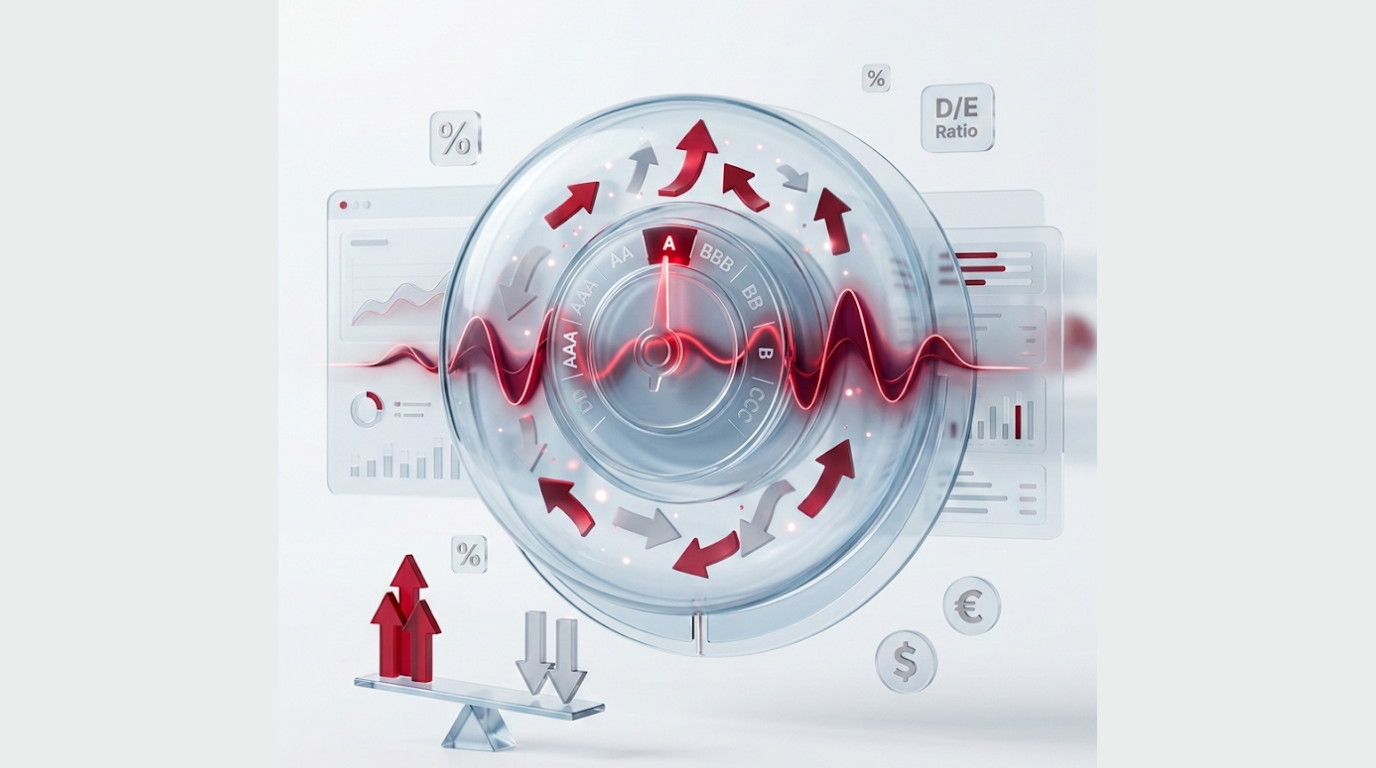
Introduction: A Dynamic Financial Pulse
A credit rating is not a static “stamp” that stays with a company forever. Instead, it is a dynamic opinion that evolves alongside a company’s financial health, the broader economy, and shifting industry trends. In the Indian financial market, Credit Rating Agencies (CRAs) are mandated by SEBI to keep these ratings under continuous surveillance. When a rating changes, it is a significant market event that can either lower a company’s borrowing costs (an upgrade) or signal a looming crisis (a downgrade).
1. Shifts in Financial Performance
The most common reason for a rating change is a shift in the company’s balance sheet. As outlined in Decoding Credit Rating, agencies focus on specific “Debt Protection Metrics”:
- Leverage Ratios: If a company takes on excessive new debt without a corresponding increase in profits, its “Gearing” ratio worsens, often leading to a downgrade.
- Liquidity Position: A sudden “liquidity crunch”—where a company has high debt repayments due but insufficient immediate cash flow—is a primary trigger for downward rating actions.
- Profitability: Significant and sustained improvements in EBITDA margins and net cash accruals can lead to an upgrade.
2. Business and Industry Risks
External factors can force a rating change even if a company’s internal management remains stable:
- Industry Cyclicality: For sectors like Steel or Real Estate, a prolonged downturn can lead to “multi-notch” downgrades for even the strongest players.
- Regulatory Changes: New government policies, tax hikes, or environmental mandates can suddenly increase operating costs, impacting the company’s ability to service debt.
- Market Position: Losing significant market share to a competitor increases a company’s business risk profile, potentially lowering its rating.
3. Management and Governance Factors
Credit ratings evaluate “character” as much as “capital.” Ratings often change due to:
- Changes in Ownership: If a company is acquired by a stronger parent group, its rating may be “notched up.” Conversely, the exit of a supportive parent can trigger a drop.
- Corporate Governance: Findings of forensic audits, frequent changes in statutory auditors, or legal disputes involving promoters can lead to immediate negative rating actions.
4. The Surveillance Mechanism
Under SEBI guidelines, agencies do not wait for a company to report problems. They maintain accuracy through:
- Annual Reviews: A mandatory deep-dive into the company’s performance every year.
- Event-Based Reviews: Immediate re-evaluations triggered by “material events” such as mergers, large capital expenditures, or a sudden drop in share price.
5. Transition to Default (The ‘D’ Rating)
The most severe rating change is the move to ‘D’ (Default). In India, agencies follow a “Default is Default” policy. This means if a company misses a single payment of interest or principal—even by one day—the rating is immediately downgraded to ‘D’. There is generally no grace period for delays unless specifically mentioned in the instrument’s terms.
Conclusion
Credit rating changes serve as the financial “report card” for the market. An upgrade is a badge of honor that reduces interest costs, while a downgrade serves as a vital warning to investors. By understanding the triggers behind these changes, stakeholders can better navigate the complexities of the Indian debt market.
