
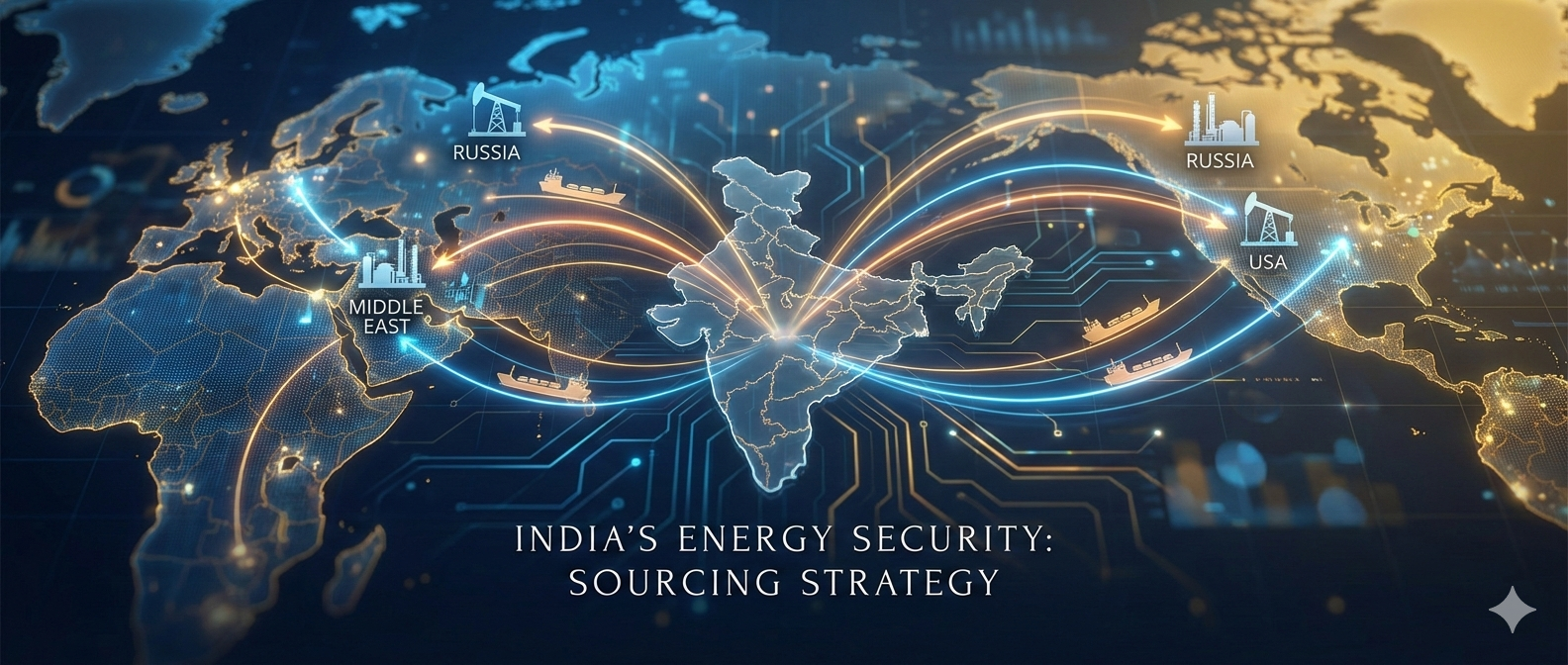
India has once again reaffirmed its commitment to sourcing crude oil from multiple global suppliers, underlining a strategic approach focused on affordability, reliability, and national economic stability. At a time when geopolitical tensions and global trade dynamics are reshaping energy markets, this position reflects India’s pragmatic and long term view on energy security.
This is not merely a policy statement about oil procurement. It is a broader economic strategy that influences inflation, industrial competitiveness, fiscal health, and long term growth prospects.
India’s Dependence on Imported Energy
India is the world’s third largest consumer of crude oil, and its economy relies heavily on imports to meet domestic demand. Approximately 80 to 85 percent of the country’s crude oil requirement is imported, making energy procurement a critical economic priority.
Because of this dependence, fluctuations in global oil prices directly affect inflation and cost of living, transportation and logistics expenses, manufacturing and power generation costs, and fiscal deficit and currency stability.
For policymakers, ensuring a steady and affordable supply of crude oil is not just about energy. It is about safeguarding economic momentum.
Why India Prefers a Diversified Oil Basket
India has made it clear that its oil sourcing decisions will be guided by market dynamics and national interest, not by geopolitical pressure.
A diversified sourcing strategy allows India to reduce reliance on any single country or region, minimise supply disruption risks, maintain competitive pricing, and improve negotiation leverage with suppliers.
In essence, diversification acts as a risk management tool for the economy.
Oil procurement decisions are primarily made by public and private sector oil companies based on commercial and operational factors such as availability of supply, pricing competitiveness, freight and logistics considerations, and internal governance and accountability.
This approach reinforces India’s position as a commercially driven and pragmatic energy buyer.
The Global Context and Why This Strategy Matters Now
Global energy markets have experienced significant volatility in recent years due to geopolitical conflicts, sanctions and trade restrictions, supply chain disruptions, and shifting global alliances.
These developments have highlighted the risks of over dependence on a single energy supplier. Countries across the world are rethinking energy security, and India’s diversified sourcing strategy aligns with this broader global trend.
By purchasing oil from multiple regions, India reduces exposure to sudden disruptions and ensures a steady supply during uncertain times.
India as a Stabilising Force in Global Oil Markets
India’s position as one of the largest oil importers gives it a unique role in the global energy ecosystem. A diversified procurement strategy contributes to stable global demand patterns, reduced price volatility, and greater resilience in supply chains.
By maintaining flexibility in sourcing, India helps balance global oil markets during periods of disruption. This role is increasingly recognised by international stakeholders.
Protecting the Economy from Inflation
Fuel prices are closely linked to inflation in India. When oil prices rise sharply, the impact spreads across the economy.
Transportation costs increase because fuel is a key input for logistics, shipping, and public transport. Manufacturing costs rise as industries depend on fuel for power generation, raw material processing, and distribution. Consumer prices eventually increase as higher transportation and production costs pass through to everyday goods.
A diversified oil sourcing strategy helps ensure competitive pricing, which in turn supports inflation control.
Supporting India’s Growth Story
Affordable and reliable energy is a cornerstone of economic growth. India’s long term development goals including infrastructure expansion, industrial growth, and manufacturing scale up require stable energy supplies.
Energy security supports industrial expansion, infrastructure development, export competitiveness, and long term investment planning.
By prioritising diversified sourcing, India strengthens the foundation needed to sustain high growth rates.
The Strategic Flexibility Advantage
One of the most important aspects of India’s oil strategy is flexibility. The country does not lock itself into fixed sourcing patterns. Instead, it continuously adjusts its procurement mix based on market conditions, price trends, supply availability, and economic priorities.
This dynamic approach allows India to adapt quickly to global changes while protecting domestic interests.
What This Means for Businesses
India’s multi source oil strategy has important implications for businesses across sectors.
Stable fuel prices help companies plan budgets and manage operating costs more effectively. Energy security reduces macroeconomic uncertainty and encourages long term investments. Affordable energy lowers production costs and strengthens India’s global competitiveness. Lower inflation and stable fuel prices contribute to a healthier macroeconomic environment.
Looking Ahead
India’s commitment to sourcing oil from multiple suppliers is expected to remain a core pillar of its economic and energy policy. As global energy markets continue to evolve, this strategy provides the flexibility and resilience needed to navigate uncertainty.
The message is clear. Energy security must be diversified, market driven, and aligned with national interest.
By maintaining this balanced approach, India is protecting its economy while reinforcing its role as a stable and influential participant in global energy markets.
Source Financial Express India remains firm on multiple oil sources
