


How Rating Agencies Track Market Signals
By: admin
Articles
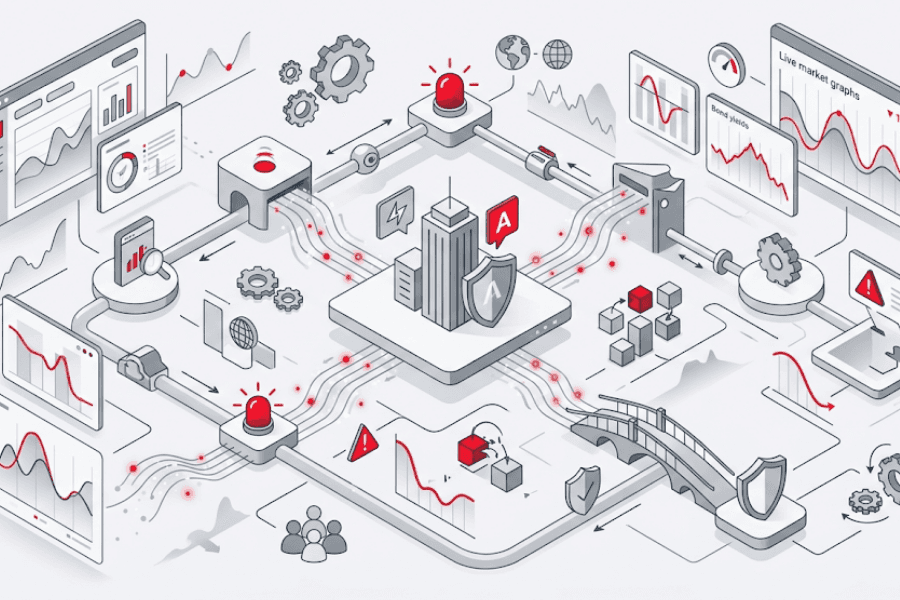
How Rating Agencies Track Market Signals
Credit ratings play a critical role in financial markets by shaping investor perception, influencing borrowing costs, and guiding risk decisions. However, a credit rating is not a static opinion formed at a single point in time. It is a dynamic assessment that must continuously reflect changing market realities. To achieve this, credit rating agencies actively track a wide range of market signals as part of their ongoing surveillance process.
Tracking market signals enables rating agencies to identify emerging risks, validate financial assumptions, and ensure that ratings remain relevant, forward-looking, and credible throughout the life of a rated instrument.
Credit Ratings as Living Assessments
At their core, credit ratings express an opinion on an issuer’s future ability to meet financial obligations. Because economic conditions, business environments, and financial structures evolve constantly, ratings must adapt accordingly.
This is why rating agencies operate under structured surveillance frameworks. Beyond scheduled reviews, analysts continuously monitor market-based indicators that provide early insight into changes in risk perception — often before such changes are visible in financial statements.
What Are Market Signals?
Market signals are observable indicators that reflect how investors, lenders, and the broader market perceive credit risk. These signals originate from multiple sources and together form an external lens through which creditworthiness is assessed.
Common market signals include:
Movements in bond yields and yield spreads
Changes in credit default swap (CDS) spreads
Equity price volatility and market capitalization trends
Liquidity conditions in debt markets
Sector-wide valuation shifts
Macroeconomic indicators such as interest rates, inflation, and growth trends
News, disclosures, and regulatory developments
Rating agencies do not rely on any single signal. Instead, they analyze patterns, persistence, and context across multiple indicators.
Market Pricing as a Real-Time Risk Barometer
One of the most powerful sources of market signals comes from financial market pricing. Bond yields, yield spreads, and CDS prices adjust continuously as investors reassess risk.
Sustained widening of spreads or sharp deterioration in pricing can indicate rising concerns about an issuer’s credit profile. While market movements alone do not automatically lead to rating actions, they often trigger closer scrutiny and deeper analysis by rating analysts.
These pricing signals serve as real-time feedback from the market and often function as early warning indicators of potential stress.
Macroeconomic and Sector Signals
Market signals are not limited to individual companies. Rating agencies closely monitor broader economic and industry trends to understand the backdrop against which issuers operate.
Changes in interest rate cycles, inflation trends, regulatory policies, or commodity prices can materially affect entire sectors. For example, rising interest rates may pressure highly leveraged companies, while regulatory changes can alter risk dynamics in financial or infrastructure sectors.
By integrating macro and sector signals, rating agencies ensure that ratings reflect both company-specific fundamentals and systemic risk factors.
Issuer-Specific Financial and Operational Signals
Alongside market data, rating agencies track issuer-specific information on an ongoing basis. This includes:
Periodic financial statements and cash flow performance
Changes in leverage, liquidity, and coverage ratios
Capital expenditure plans and funding structures
Management strategy, guidance, and execution
Corporate actions such as acquisitions, divestments, or restructuring
Analysts assess whether internal performance trends align with external market signals. Divergence between fundamentals and market pricing often prompts further engagement with management to understand underlying drivers.
News Flow, Disclosures, and Qualitative Signals
In today’s information-rich environment, qualitative signals play an increasingly important role. Rating agencies monitor news flow, regulatory announcements, litigation developments, governance changes, and sector-specific events.
Even seemingly non-financial developments — such as management changes or operational disruptions — can carry credit implications. These qualitative signals often provide context that helps explain market reactions or anticipate future financial impact.
Structured Surveillance and Early Warning Systems
Tracking market signals is not ad hoc. Rating agencies employ structured surveillance systems that combine:
Continuous data collection
Automated alerts for unusual movements or trends
Analytical dashboards tracking key credit metrics
Regular analyst reviews and issuer engagement
Escalation to rating committees when required
These systems help agencies detect emerging risks early, long before they crystallize into defaults or severe credit deterioration.
Balancing Market Signals with Analytical Judgment
While market signals are critical inputs, they do not replace analytical judgment. Markets can overreact to short-term events or temporary sentiment shifts.
Rating agencies therefore apply professional judgment to distinguish between transient volatility and fundamental credit changes. Analysts evaluate the durability of market movements, their consistency with business fundamentals, and the issuer’s ability to absorb shocks.
Final rating decisions are taken through structured committee processes that weigh quantitative data, market signals, and qualitative insights together.
Why Tracking Market Signals Matters
By continuously tracking market signals, rating agencies:
Ensure ratings remain timely and relevant
Detect credit stress at an early stage
Enhance transparency and market confidence
Support informed decision-making by investors and lenders
Strengthen the credibility of the rating process
For issuers, understanding how market signals are monitored highlights the importance of transparency, proactive communication, and disciplined financial management.
Conclusion
Tracking market signals is central to how credit rating agencies maintain the integrity and usefulness of their ratings. By combining real-time market data, macroeconomic trends, issuer-specific fundamentals, and professional judgment, agencies ensure that credit ratings remain dynamic, forward-looking, and aligned with evolving risk realities.
In an environment where markets respond rapidly to new information, continuous monitoring of market signals is not just best practice — it is essential to sustaining trust in the credit rating ecosystem.
Steps Companies Should Take After a Downgrade
A credit rating downgrade is a serious event for any company. It signals heightened credit risk and often leads to higher borrowing costs, tighter covenants, restricted market access, and increased scrutiny from lenders and investors. While a downgrade can feel disruptive, it does not have to be permanent.
Companies that respond decisively, communicate transparently, and execute a structured recovery plan often emerge stronger and more resilient. A downgrade should be treated not as a setback alone, but as a trigger for corrective action and strategic realignment.
Below is a comprehensive roadmap for companies navigating the aftermath of a downgrade.
1. Understand the Root Causes Clearly
The first and most critical step is to fully understand why the downgrade occurred. Management must conduct a thorough internal assessment to identify the underlying drivers behind the rating action.
This includes reviewing:
Financial performance and cash flow trends
Leverage levels and debt servicing capacity
Liquidity position and near-term obligations
Operational challenges or execution gaps
Industry or macroeconomic pressures
Governance, disclosure, or transparency issues
Clarity on root causes ensures that corrective actions address real problems rather than symptoms.
2. Stabilise Liquidity and Cash Flows
Post-downgrade, financial stability becomes the immediate priority. Companies should focus on preserving cash and ensuring uninterrupted debt servicing.
Key actions include:
Strengthening working capital management
Accelerating collections and optimising inventory
Rationalising discretionary spending
Securing committed funding lines or contingency liquidity
Closely monitoring short-term debt maturities
Demonstrating strong liquidity control reassures lenders and reduces the risk of further negative rating actions.
3. Engage Proactively with Rating Agencies
Silence after a downgrade can be damaging. Companies should engage constructively with rating agencies to understand expectations and provide clarity on future plans.
This involves:
Sharing updated financial projections and assumptions
Explaining corrective measures already underway
Clarifying whether identified risks are structural or temporary
Demonstrating management commitment to improvement
Transparent engagement helps agencies reassess risk more accurately during subsequent reviews.
4. Communicate Clearly with Lenders and Investors
Stakeholder communication is critical after a downgrade. Companies should communicate early, openly, and consistently with lenders, bondholders, and investors.
Effective communication should cover:
Reasons behind the downgrade
Immediate steps taken to stabilise operations
Medium-term financial and strategic roadmap
Expected timeline for recovery
Clear messaging reduces uncertainty, prevents speculation, and helps maintain confidence during a sensitive period.
5. Review Covenants and Financing Arrangements
Downgrades often bring covenant pressure. Companies must review all financing agreements to assess potential breaches or tightening headroom.
Where required:
Initiate early discussions with lenders
Seek covenant waivers or amendments proactively
Restructure debt maturities to ease near-term pressure
Align repayment schedules with cash flow capacity
Early action is far more effective than reactive negotiations under stress.
6. Reassess Capital Structure
A downgrade often signals that the existing capital structure may no longer be optimal. Companies should reassess leverage and funding mix with a long-term perspective.
Potential steps include:
Reducing debt through asset monetisation or equity infusion
Refinancing high-cost or short-term borrowings
Exploring alternative funding options such as private capital or strategic partnerships
A sustainable capital structure is central to restoring credit strength.
7. Improve Operational Efficiency
Beyond financial restructuring, operational performance plays a vital role in credit recovery. Companies should focus on improving margins, productivity, and execution quality.
This may involve:
Streamlining operations and cost structures
Exiting non-core or underperforming segments
Prioritising high-return projects
Strengthening supply chain and execution controls
Improved operating performance directly enhances cash flows and credit metrics.
8. Strengthen Risk Management and Governance
Many downgrades highlight weaknesses in risk management or internal controls. Addressing these gaps is essential for long-term stability.
Companies should:
Enhance enterprise risk management frameworks
Introduce early-warning indicators for financial stress
Improve forecasting, budgeting, and scenario analysis
Strengthen governance, disclosures, and compliance practices
Strong governance builds confidence with both rating agencies and investors.
9. Demonstrate Consistent Execution
Credit recovery is rarely immediate. Rating agencies and markets look for consistency, not short-term fixes.
Companies must:
Deliver on stated financial and operational targets
Track progress against clearly defined milestones
Provide regular, transparent updates to stakeholders
Avoid aggressive strategies that could increase risk
Consistent execution over time is the most effective path to rating stabilisation and eventual improvement.
10. Use the Downgrade as a Strategic Reset
While challenging, a downgrade can act as a catalyst for positive change. It forces management to reassess assumptions, sharpen focus, and strengthen fundamentals.
Companies that use this moment to realign strategy, improve discipline, and build resilience often emerge with stronger business models and improved market credibility.
Conclusion
A credit rating downgrade is not the end of the road. It is a signal — one that demands swift action, honest assessment, and disciplined execution. Companies that respond proactively by stabilising finances, strengthening operations, and communicating transparently can restore confidence and rebuild credit strength over time.
Handled correctly, a downgrade becomes not just a challenge to manage, but an opportunity to reset, strengthen, and move forward on a more sustainable footing.