


Post-Rating Monitoring – A Continuous Obligation
By: admin
Articles
Post-Rating Monitoring – A Continuous Obligation
A credit rating is often viewed as a milestone moment — assigned after rigorous analysis, presentations, and evaluations. However, in reality, a credit rating is not a one-time opinion. It is a living assessment that must evolve with the company’s financial position, business environment, and risk profile. This is where post-rating monitoring becomes critical.
Post-rating monitoring, also known as rating surveillance, is the continuous process of reviewing and reassessing a company’s creditworthiness after a rating has been assigned. It remains in force throughout the life of the rated instrument and is a shared responsibility between the credit rating agency and the rated entity.
For companies accessing debt markets, post-rating monitoring is not optional. It is a continuous obligation that safeguards credibility, transparency, and long-term access to capital.
Understanding Post-Rating Monitoring
Post-rating monitoring refers to the ongoing evaluation of a company’s financial health and risk factors after the initial credit rating is issued. The objective is to ensure that the rating continues to accurately reflect the company’s ability to meet its financial obligations.
This process involves periodic reviews, continuous information tracking, and event-based reassessments. The focus is not only on historical performance but also on forward-looking risks and sustainability of cash flows.
Unlike the initial rating exercise, which is often time-bound, monitoring continues as long as the debt remains outstanding.
Why Post-Rating Monitoring Is a Continuous Obligation
1. Business and Risk Profiles Are Dynamic
No business operates in a static environment. Revenue cycles fluctuate, input costs change, competitive pressures evolve, and macroeconomic conditions shift. For leveraged companies, even minor operational or financial changes can materially affect debt-servicing capacity.
Post-rating monitoring ensures that such changes are identified and evaluated on an ongoing basis, preventing ratings from becoming outdated or misaligned with reality.
2. Credit Ratings Are Forward-Looking by Nature
A credit rating is not a reflection of past performance alone. It is an opinion on future repayment ability. Continuous monitoring allows rating agencies to assess whether emerging trends — positive or negative — are likely to influence the company’s credit profile.
Without post-rating surveillance, ratings would remain backward-looking and fail to capture evolving risks or improvements in a timely manner.
3. Protects Market Confidence and Transparency
Investors, lenders, and financial institutions rely on credit ratings as independent indicators of risk. Regular monitoring enhances confidence that ratings are current, credible, and based on the latest available information.
When ratings are actively monitored, the market receives timely signals about changes in credit quality, reducing information asymmetry and improving capital allocation efficiency.
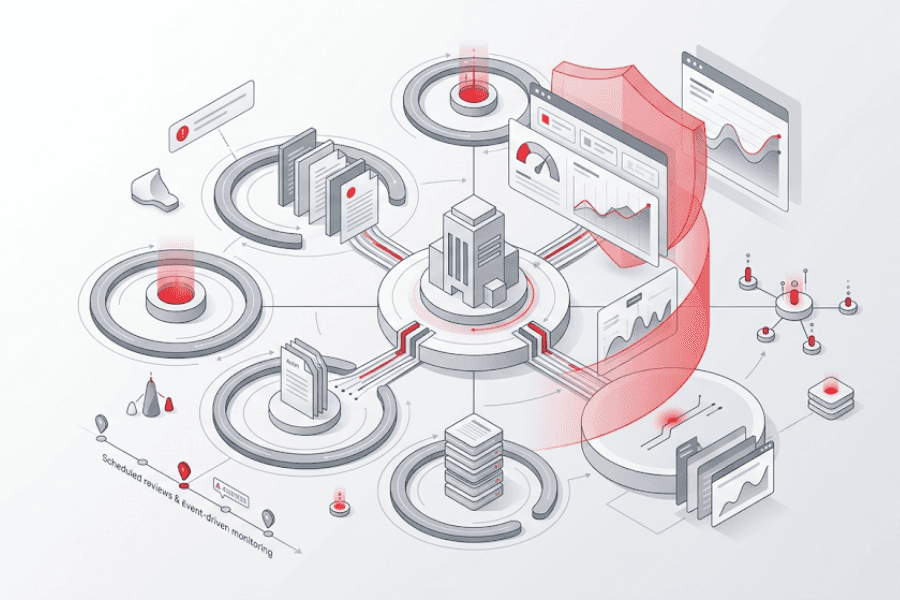
4. Includes Both Scheduled and Event-Driven Reviews
Post-rating monitoring operates through two parallel mechanisms:
Scheduled Reviews
These are periodic reviews conducted at predefined intervals, often annually. They involve reassessing financial performance, debt metrics, liquidity position, industry outlook, and business strategy.
Event-Driven Reviews
Apart from scheduled reviews, ratings may be reassessed whenever a material event occurs. These events can include:
Significant changes in financial performance
Delay or stress in debt servicing
Major acquisitions, expansions, or divestments
Changes in capital structure or funding mix
Regulatory or legal developments
Industry-wide disruptions or macroeconomic shocks
This dual approach ensures that ratings remain responsive to real-time developments.
Early Warning System for Credit Stress
One of the most valuable outcomes of post-rating monitoring is its role as an early warning mechanism.
Continuous surveillance helps identify emerging stress in areas such as cash flow adequacy, working capital pressure, rising leverage, or weakening margins. Early identification allows companies to take corrective actions before stress escalates into defaults or rating downgrades.
For lenders and investors, this early visibility supports better risk management and informed decision-making.
Encourages Financial Discipline and Governance
The discipline required for post-rating monitoring often leads to stronger internal financial systems. Companies are encouraged to:
Maintain updated financial records
Track key credit metrics regularly
Improve forecasting and budgeting accuracy
Strengthen internal controls and disclosures
Over time, this discipline enhances overall financial governance and resilience.
Role of the Rated Entity
Post-rating monitoring is not solely the responsibility of rating agencies. Rated entities play a crucial role by:
Providing timely and accurate financial information
Disclosing material developments promptly
Engaging proactively with analysts
Ensuring transparency in operations and strategy
Lack of cooperation or delayed information can itself become a negative factor in the rating process, as it raises concerns about governance and transparency.
Monitoring Continues Until the Obligation Ends
A key aspect often misunderstood is that post-rating monitoring continues until the rated obligation is fully repaid or formally withdrawn under defined circumstances. As long as investors or lenders are exposed, the rating must remain current and monitored.
This ensures that stakeholders are not left without an updated credit opinion while risk exposure continues.
Beyond Compliance – A Strategic Perspective
While post-rating monitoring is often viewed as a regulatory or contractual requirement, its true value lies in its strategic benefits.
Companies that actively engage in the monitoring process are better positioned to:
Manage borrowing costs
Plan refinancing more effectively
Maintain lender and investor confidence
Navigate economic cycles with greater stability
In contrast, companies that treat monitoring as a formality often face abrupt rating actions, higher financing costs, and strained stakeholder relationships.
Conclusion
Post-rating monitoring is not an administrative follow-up to the rating process — it is a continuous obligation that underpins the credibility of credit ratings. It ensures that ratings remain relevant, forward-looking, and reflective of actual risk over time.
For companies, especially those with meaningful leverage, active participation in post-rating monitoring is essential. It supports transparency, strengthens financial discipline, and protects long-term access to capital.
In an environment where markets reward clarity and consistency, continuous rating surveillance is not just good practice — it is a necessity.