
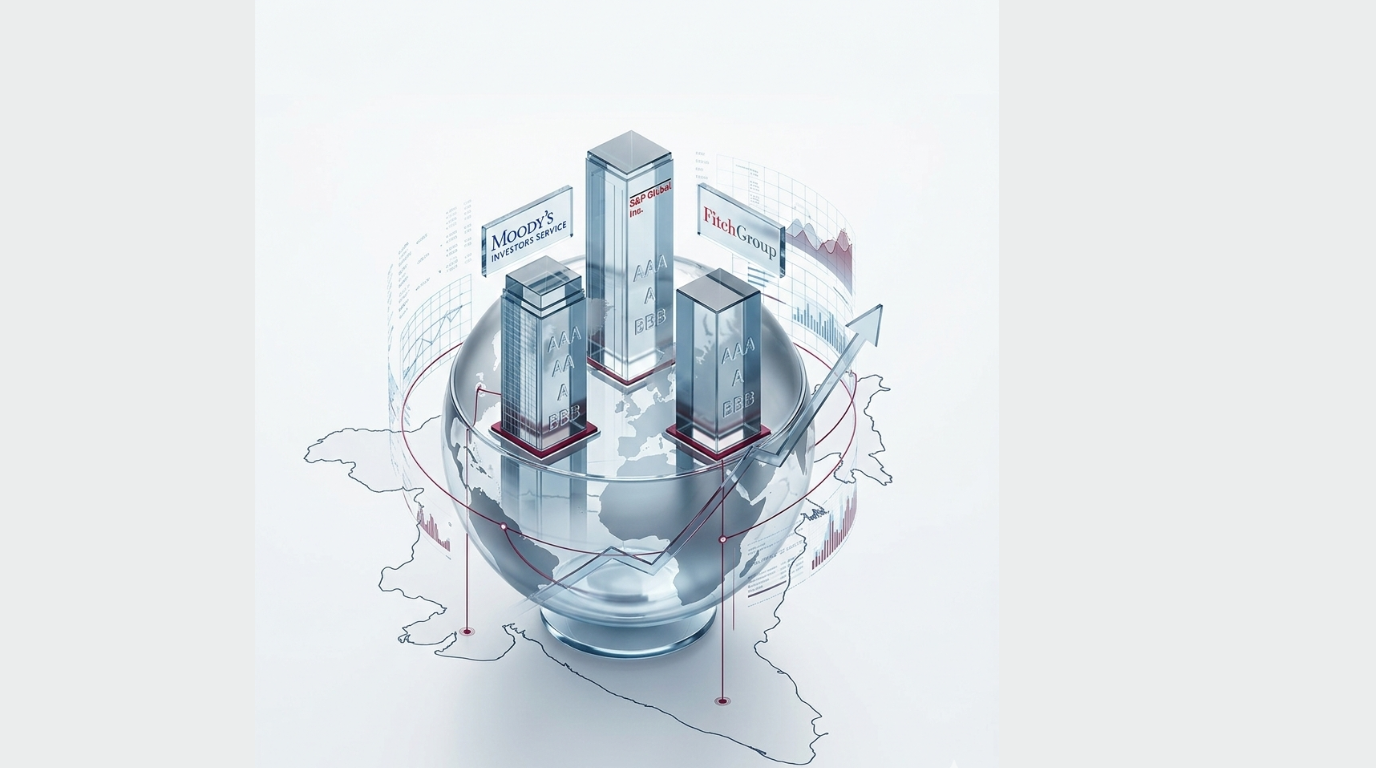
Introduction: The Integration of Global Standards
The Indian credit rating landscape has evolved from a collection of domestic pioneers into a globally integrated ecosystem. Today, the world’s “Big Three” rating agencies—Moody’s Investors Service, S&P Global Inc., and Fitch Group—are not just international observers; they are the primary architects of credit risk standards in India through their ownership of domestic agencies.
The Big Three: Ownership and Local Partnerships
The influence of global giants is most clearly seen in their majority stakes and strategic control over India’s leading rating institutions:
- S&P Global Inc. (Standard & Poor’s): S&P exercises its influence through CRISIL, India’s oldest and largest rating agency. CRISIL is a majority-owned subsidiary of S&P Global, allowing it to leverage S&P’s global analytical frameworks while maintaining its deep-rooted local expertise.
- Moody’s Investors Service: Moody’s operates through ICRA. Established as a joint venture in 1991, ICRA is now majority-owned by Moody’s Corporation. This partnership ensures that ICRA’s methodologies are globally aligned, making its ratings highly respected by international institutional investors.
- Fitch Group: Unlike the other two, Fitch operates through India Ratings and Research (Ind-Ra), which is a 100% wholly-owned subsidiary of the Fitch Group. This direct ownership model allows for a seamless application of Fitch’s global rating criteria to the Indian corporate and sovereign landscape.
Their Influence on the Indian Financial Ecosystem
The presence of these global players has fundamentally transformed the Indian market in several ways:
- Analytical Rigor and Benchmarking: By introducing global analytical models, these agencies have standardized how credit risk is measured in India. This allows an Indian “AAA” rated bond to be understood by an investor in London or New York using the same “language of risk.”
- Sovereign Credit Ratings: These agencies hold the power to rate the Indian Government (the “Sovereign”). As of 2025, India’s investment-grade rating (typically around BBB-) is a critical metric that dictates the flow of Foreign Portfolio Investment (FPI) into the country.
- Regulatory Trust: Both the Reserve Bank of India (RBI) and SEBI rely on these agencies for critical regulatory functions, such as risk-weighting bank assets and certifying the creditworthiness of debt instruments used by mutual funds and insurance companies.
- Growth of the Bond Market: The global branding of these agencies has provided the confidence necessary for India’s corporate bond market to grow to over ₹15.6 lakh crore.
Conclusion
The “Big Three” have bridged the gap between Indian borrowers and global capital. By bringing international credibility to domestic ratings, Moody’s, Fitch, and S&P have ensured that as India moves toward a $5 trillion economy, its financial system remains transparent, stable, and attractive to investors worldwide.
