
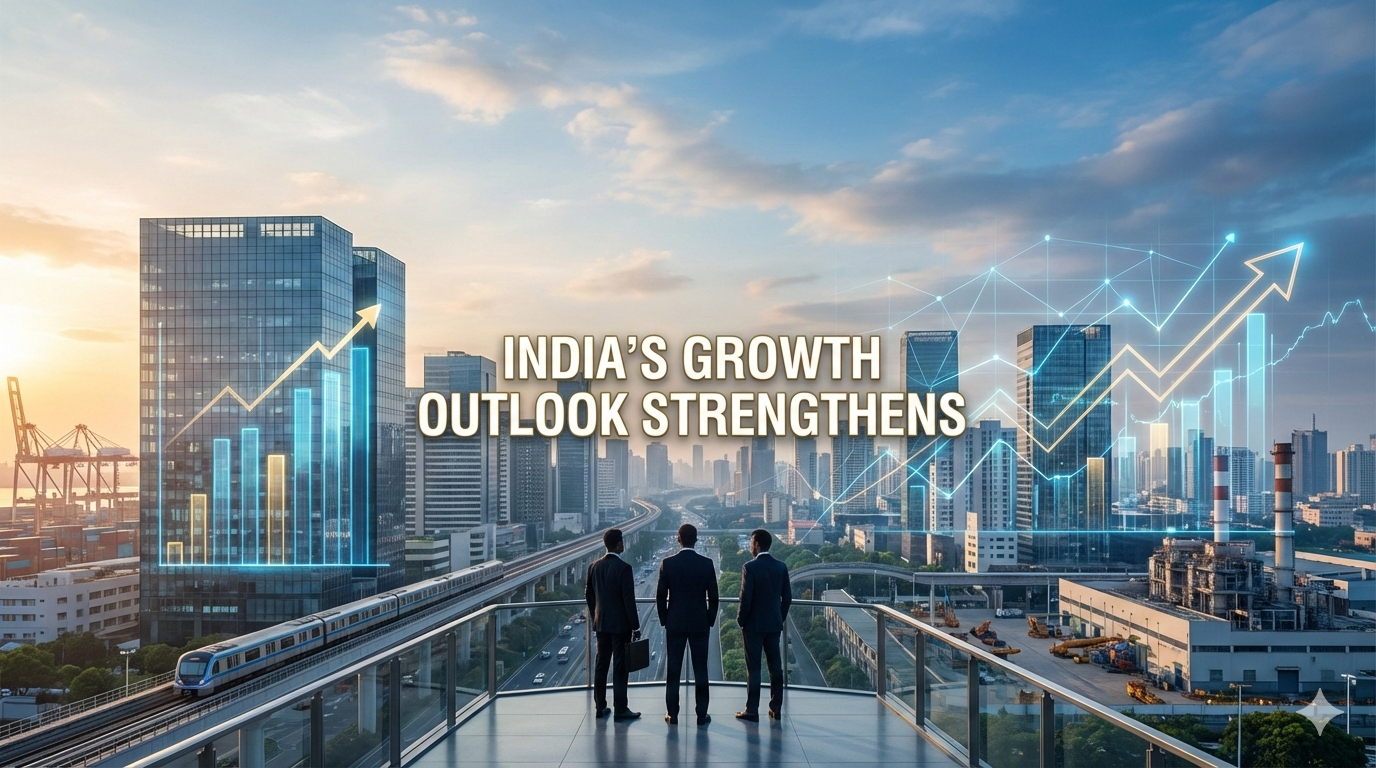
India’s economic momentum continues to attract global attention. Moody’s latest outlook projects that India’s real GDP will grow at around 6.4% in FY2026–27, reinforcing the country’s position as one of the fastest-growing major economies in the world.
While GDP forecasts often appear as headline numbers, the real significance lies in what they signal for businesses, lenders, investors, and the broader credit ecosystem. A stable growth environment reshapes lending behaviour, influences credit availability, and changes how companies prepare for expansion and capital raising.
This article explores what the forecast means in practical terms — and why the coming years could be a defining period for Indian businesses.
India’s Growth Story: Entering a Stable Expansion Phase
The projected 6.4% growth rate reflects structural resilience rather than short-term recovery. India’s growth is increasingly supported by domestic fundamentals instead of temporary global tailwinds.
Several macro drivers are expected to support this trajectory:
- Stable domestic consumption
- Improving private investment activity
- Healthy banking sector fundamentals
- Continued policy support and reforms
- Strong corporate balance sheets
This combination creates an environment where businesses can plan long-term investments with greater confidence.
For the corporate sector, this signals a shift from uncertainty-driven survival to strategy-driven expansion.
Domestic Demand Becomes the Core Growth Engine
One of the most important themes in Moody’s outlook is the strength of India’s domestic consumption story.
Unlike many export-dependent economies, India’s growth is increasingly powered by its internal demand base. This has several implications:
1. Greater Demand Stability
Strong consumption reduces reliance on volatile global markets. This creates a more predictable revenue environment for businesses.
2. Expansion Across Multiple Sectors
Consumer demand supports growth in:
- Manufacturing
- Infrastructure
- Services
- Retail and FMCG
- Housing and real estate
3. Rising Capacity Expansion
As demand stabilizes, companies are more willing to invest in:
- New plants and machinery
- Technology upgrades
- Geographic expansion
- Workforce growth
This directly increases capital requirements across industries.
Investment Cycle Shows Signs of Strengthening
India is gradually entering a new private investment cycle. As economic visibility improves, companies are moving from cautious spending to growth-oriented investment decisions.
This shift is critical because investment cycles typically drive:
- Job creation
- Productivity growth
- Export competitiveness
- Long-term economic expansion
When businesses invest, demand for funding rises — strengthening the importance of banks, NBFCs, and capital markets.
Banking Sector Stability: A Key Enabler of Growth
A major highlight of the outlook is the strong position of India’s banking system.
Moody’s expects the banking sector to remain resilient due to:
- Stable asset quality
- Strong capital buffers
- Healthy profitability
- Deposit growth aligned with lending demand
This is a significant development because the banking system acts as the primary channel through which economic growth reaches businesses.
A strong banking system means:
- Higher lending capacity
- Greater willingness to finance expansion
- Improved confidence among investors
For businesses, this translates into a more supportive credit environment.
Credit Growth Will Track Economic Expansion
As GDP grows, demand for credit naturally increases. Moody’s expects credit expansion to broadly align with economic activity.
This trend has important implications:
Lending Opportunities Will Expand
Businesses seeking funding for:
- Working capital
- Capacity expansion
- Infrastructure investments
- New projects
are likely to find an active lending ecosystem.
But Credit Selection Will Tighten
As lending volumes rise, financial institutions typically become more selective about borrower quality.
This leads to:
- Greater emphasis on financial transparency
- Increased scrutiny of business models
- Stronger focus on creditworthiness
In other words, funding may become more available — but better-prepared companies will gain the greatest advantage.
MSMEs and Export-Oriented Businesses: A Positive Shift Ahead
The outlook also highlights improving prospects for MSMEs and export-linked sectors, especially in light of potential trade developments between India and the United States.
This could lead to:
- Stronger export demand
- Improved operating conditions for MSMEs
- Better revenue visibility for export-oriented industries
- Strengthening credit profiles over time
For many mid-market businesses, this could mark the beginning of a new growth cycle supported by global trade opportunities.
Rising Deposit Competition: A Subtle but Important Trend
While the outlook is positive, Moody’s notes an important challenge — competition for deposits is expected to increase.
This matters because deposits are the primary funding source for bank lending. When deposit competition intensifies:
- Banks become more selective about lending
- Pricing of loans becomes more risk-sensitive
- Borrower quality becomes a key differentiator
This reinforces the importance of strong financial positioning and credible credit profiles.
Why Economic Growth Changes the Credit Landscape
A growing economy improves the overall credit environment by strengthening:
- Corporate earnings
- Cash flow stability
- Repayment capacity
- Investor confidence
- Lender risk appetite
These factors collectively influence how financial institutions evaluate businesses.
In expansionary cycles, companies that prepare early often benefit from:
- Faster loan approvals
- Better financing terms
- Wider funding options
- Greater investor interest
Strategic Implications for Businesses
India’s projected growth is more than a macroeconomic milestone — it is a signal of opportunity.
The coming years could bring:
- Increased lending capacity
- Greater investor appetite
- Stronger export prospects
- Rising competition for funding
- Higher emphasis on credit quality and transparency
This means businesses must shift from reactive financing to strategic capital planning.
Preparing for the Next Growth Cycle
In a stable growth environment, access to capital becomes both easier and more competitive.
Companies that proactively strengthen their financial discipline and credibility are likely to benefit the most from:
- Expanding credit markets
- New investment cycles
- Growing demand across sectors
The businesses that prepare today will be better positioned to access funding, scale operations, and capture opportunities as India’s growth story continues to unfold.
Source: Economic Times
https://economictimes.indiatimes.com/news/economy/indicators/india-real-gdp-growth-6-4-pc-in-fy27-moodys-forecast-us-trade-deal-consumer-demand-strong-banking-fundamentals/articleshow/128099698.cms
