


Typical Timelines in a Credit Rating Assignment
By: admin
Articles
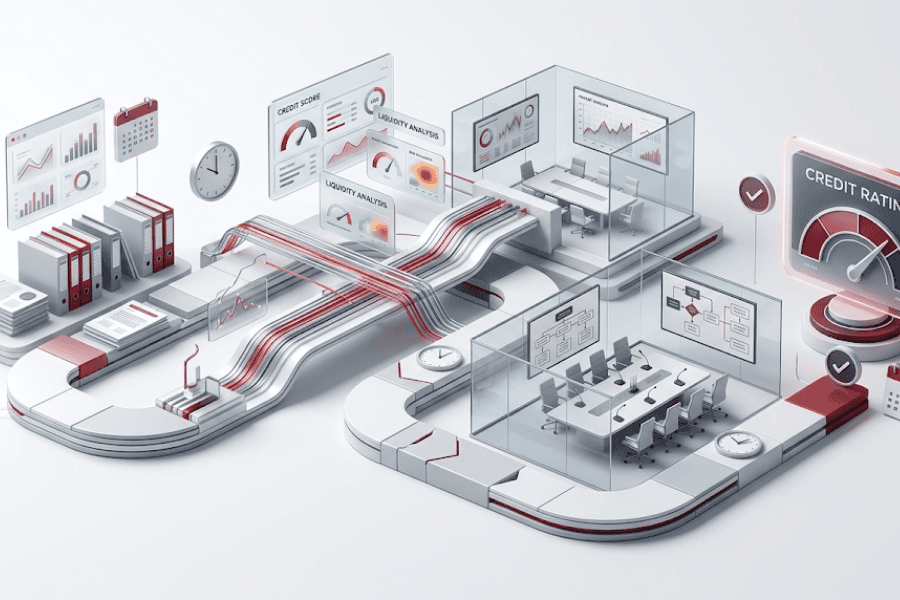
Typical Timelines in a Credit Rating Assignment
One of the most common questions businesses ask before initiating a credit rating exercise is:
“How long does the rating process usually take?”
While many companies expect ratings to be completed quickly once financial documents are submitted, the reality is that a credit rating assignment is a structured analytical process involving:
information collection,
financial analysis,
management discussions,
industry evaluation,
internal reviews,
and committee-level decision making.
The timeline of a rating assignment depends on multiple factors, including:
quality of information provided,
responsiveness of management,
complexity of business operations,
industry characteristics,
group structure,
and the nature of facilities being rated.
A straightforward working capital renewal rating for a stable business may move relatively quickly, while complex assignments involving:
infrastructure projects,
NBFCs,
group entities,
structured debt,
or large expansion plans
may require significantly deeper analysis and longer timelines.
Importantly, delays in credit rating assignments are often not caused by rating agencies alone.
In many cases, the largest delays arise from:
incomplete documentation,
slow responses,
unresolved financial inconsistencies,
delayed management discussions,
or lack of clarity around future business plans.
Understanding the typical stages and timelines involved in a rating assignment helps companies:
plan financing activities better,
improve preparedness,
reduce delays,
and manage stakeholder expectations more effectively.
Why Timelines Matter in Credit Rating Assignments
Credit ratings are often directly linked to:
bank loan renewals,
sanction enhancements,
debt issuances,
working capital arrangements,
commercial paper programs,
or investor transactions.
As a result, timing becomes critical.
Delays in rating completion can affect:
loan disbursements,
refinancing schedules,
borrowing costs,
and funding availability.
For example:
banks may require updated ratings before renewal approvals,
investors may wait for rating outcomes before subscribing to debt instruments,
and lenders may reassess exposure if ratings remain pending for prolonged periods.
Therefore, businesses should ideally begin the rating process well in advance of critical financing deadlines.
The Credit Rating Timeline Is Not Always Fixed
There is no universal timeline applicable to all rating assignments.
Some assignments may conclude within:
2–3 weeks,
while others may extend to:
several months depending on complexity.
The timeline is influenced by:
the quality of preparedness,
availability of updated information,
responsiveness during clarifications,
and the complexity of analytical assessment required.
However, most standard corporate credit rating assignments broadly move through a series of structured stages.
Understanding these stages provides clarity regarding realistic expectations.
Stage 1: Mandate Acceptance and Initial Engagement
Typical Timeline: 1–3 Days
The process begins once the company formally engages the rating agency.
At this stage:
engagement terms are finalized,
facilities to be rated are identified,
confidentiality formalities are completed,
and the assignment is officially initiated.
The agency typically shares:
detailed information requirements,
document checklists,
management questionnaires,
and expected timelines.
If the company responds promptly and internal coordination is strong, this stage is usually completed quickly.
However, delays may occur if:
financing structures are unclear,
facility details are incomplete,
or internal approvals take longer.
Stage 2: Information Collection and Documentation
Typical Timeline: 3–10 Days
This is one of the most important phases in determining the overall timeline of the assignment.
The company is required to submit detailed information including:
audited financial statements,
provisional results,
sanction letters,
bank statements,
stock statements,
receivable ageing,
management profiles,
operational data,
projections,
and future business plans.
Complex businesses may also need to provide:
subsidiary financials,
project reports,
customer concentration analysis,
order book details,
and contingent liability information.
In many assignments, the largest delays occur during this stage because:
documents are incomplete,
financial data is inconsistent,
multiple departments are involved,
or management responses are delayed.
Well-prepared companies with organized financial systems can significantly reduce the overall timeline.
Stage 3: Preliminary Analytical Review
Typical Timeline: 2–5 Days
Once information is received, analysts begin preliminary review and validation.
This stage involves:
financial analysis,
ratio assessment,
industry evaluation,
and identification of key risk areas.
Analysts may raise initial clarification queries regarding:
revenue trends,
liquidity,
receivables,
debt levels,
related-party transactions,
or projections.
The objective is to:
identify analytical gaps,
understand business structure,
and prepare for deeper management interaction.
The speed of this stage depends heavily on:
clarity of submitted information,
quality of disclosures,
and responsiveness to queries.
Stage 4: Management Discussion and Interaction
Typical Timeline: 1–7 Days
Management interaction is one of the most critical stages in the rating process.
The agency typically conducts discussions with:
promoters,
CFOs,
finance teams,
operational leadership,
and senior management.
These discussions may occur:
physically,
virtually,
or through multiple follow-up interactions.
Topics generally include:
business strategy,
liquidity management,
industry outlook,
growth plans,
operational challenges,
risk mitigation,
and future expectations.
For simple assignments, a single meeting may be sufficient.
However, complex businesses may require:
multiple rounds of interaction,
additional clarifications,
or detailed business presentations.
Scheduling delays often occur when:
senior management availability is limited,
operational data requires reconciliation,
or projections need revision.
Stage 5: Site Visit and Operational Assessment (If Applicable)
Typical Timeline: 1–5 Days
For many manufacturing, infrastructure, EPC, and operational businesses, agencies may conduct site visits.
These visits help analysts understand:
operational scale,
plant utilization,
inventory levels,
project execution capability,
and overall business infrastructure.
The timeline depends on:
geographic location,
number of facilities,
and logistical coordination.
For large groups or multiple operating locations, site assessments may take longer.
Certain assignments, particularly smaller or renewal-based ratings, may not require physical visits.
Stage 6: Detailed Analytical Assessment and Internal Review
Typical Timeline: 3–7 Days
After management discussions and operational review, analysts conduct deeper evaluation.
This stage includes:
detailed financial modelling,
liquidity assessment,
cash flow analysis,
stress testing,
industry benchmarking,
and management evaluation.
The rating team prepares an internal analytical report covering:
business strengths,
vulnerabilities,
future risks,
and recommended rating rationale.
Internal quality checks and analytical reviews are also conducted during this stage.
Complex businesses generally require:
deeper sensitivity analysis,
scenario testing,
and additional management clarifications.
This stage may take longer for sectors such as:
NBFCs,
infrastructure,
real estate,
structured finance,
or highly leveraged groups.
Stage 7: Rating Committee Process
Typical Timeline: 1–3 Days
Once analysis is complete, the assignment is presented before the rating committee.
The committee reviews:
analytical findings,
financial profile,
liquidity assessment,
management quality,
industry risks,
and proposed rating recommendation.
Committee members may:
challenge assumptions,
seek additional clarification,
request further information,
or reassess analytical conclusions.
The final rating outcome is decided collectively by the committee.
In certain cases, additional queries from the committee may extend timelines slightly if:
more information is required,
projections appear aggressive,
or significant analytical concerns remain unresolved.
Stage 8: Communication of Rating Outcome
Typical Timeline: 1–2 Days
After committee approval, the rating outcome is communicated to the company.
The agency generally shares:
assigned rating,
outlook,
rationale,
and key rating sensitivities.
For publicly disclosed ratings, final publication may follow after:
internal confirmation,
issuer acceptance,
and completion of disclosure formalities.
This stage is usually completed quickly unless:
clarifications are requested,
disclosures require modification,
or administrative approvals remain pending.
Overall Typical Timeline for Standard Assignments
For most standard corporate credit rating assignments, the overall process generally ranges between:
Approximately 2–4 Weeks
This assumes:
timely documentation,
responsive management,
stable business structure,
and absence of major analytical complications.
However, timelines can vary materially depending on assignment complexity.
Assignments That Usually Take Longer
Certain sectors and situations naturally require longer evaluation timelines due to elevated complexity and risk analysis.
These may include:
infrastructure projects,
EPC companies,
NBFCs,
large group structures,
highly leveraged entities,
project finance cases,
structured debt transactions,
or companies undergoing major restructuring.
Such assignments may require:
extensive clarification,
multiple management meetings,
legal review,
or deeper stress testing.
As a result, timelines may extend to:
4–8 weeks or more in complex cases.
Factors That Commonly Delay Rating Assignments
Several practical issues frequently delay rating completion timelines.
Incomplete Documentation
One of the biggest causes of delay is missing or inconsistent information.
Common examples include:
outdated financials,
incomplete bank data,
missing sanction letters,
unfinalized projections,
or inconsistent operational information.
Slow Management Responses
Delayed responses to analytical queries can materially extend timelines.
This becomes especially problematic when:
multiple departments are involved,
approvals are pending,
or data reconciliation is incomplete.
Frequent Projection Revisions
If management repeatedly revises:
revenue assumptions,
profitability estimates,
or expansion plans,
the analytical process may slow significantly.
Agencies require stable assumptions for meaningful assessment.
Complex Group Structures
Businesses involving:
multiple subsidiaries,
cross guarantees,
intercompany transactions,
or layered ownership structures
typically require deeper evaluation.
This increases review timelines.
Ongoing Financial Stress or Restructuring
Assignments involving:
stressed liquidity,
overdue obligations,
debt restructuring,
or legal disputes
often require additional scrutiny and verification.
How Companies Can Reduce Rating Timelines
Businesses can significantly improve assignment efficiency by:
preparing documentation in advance,
ensuring financial consistency,
appointing dedicated coordination teams,
maintaining transparent communication,
and responding quickly to analytical queries.
Well-organized companies often experience:
smoother evaluations,
faster completion,
and stronger analytical confidence.
Preparation quality directly influences both:
timeline efficiency,
and overall rating perception.
Why Rushed Ratings Can Be Risky
Some businesses attempt to accelerate timelines excessively due to urgent financing needs.
However, rushed processes may create:
incomplete analytical understanding,
weaker communication,
unresolved queries,
or inadequate representation of business strengths.
Strong ratings are built not merely through speed, but through:
clarity,
transparency,
preparation,
and analytical confidence.
A properly managed rating process often improves long-term lender confidence more effectively than a hurried assignment.
Continuous Surveillance After Assignment
Even after rating completion, the process does not fully end.
Ratings remain under ongoing surveillance.
Agencies periodically review:
financial performance,
liquidity trends,
operational developments,
and industry conditions.
Future reviews and surveillance exercises generally move faster than initial assignments because foundational understanding already exists.
However, material business changes may still trigger deeper reassessment.
Conclusion
A credit rating assignment is a structured, multi-stage analytical process that typically spans several weeks depending on:
business complexity,
information quality,
responsiveness,
and sector-specific risk considerations.
While standard assignments may generally conclude within:
2–4 weeks,
complex businesses involving:
infrastructure,
NBFCs,
restructuring,
or group-level analysis
may require significantly longer timelines.
The overall process includes:
information collection,
financial analysis,
management discussions,
operational review,
internal assessment,
and committee-level evaluation before the final rating is assigned.
Importantly, the efficiency of the process depends heavily on:
preparedness,
transparency,
and responsiveness from the company itself.
Businesses that approach rating assignments proactively with:
organized documentation,
realistic projections,
and clear communication
usually experience smoother timelines and stronger analytical confidence.
Ultimately, credit rating timelines are not merely administrative schedules.
They reflect the depth of evaluation required to assess a company’s long-term financial resilience and repayment capability.