
How Rating Agencies Factor Industry Cycles
By: admin
Articles
How Rating Agencies Factor Industry Cycles
Credit ratings are not determined solely by a company’s balance sheet, profitability, or management strength.
A company may demonstrate:
healthy revenues,
strong liquidity,
comfortable debt protection metrics,
experienced promoters,
and efficient operations,
yet its credit profile can still be influenced by broader industry conditions.
This is because rating agencies evaluate businesses not only on standalone financial performance, but also on the environment in which they operate.
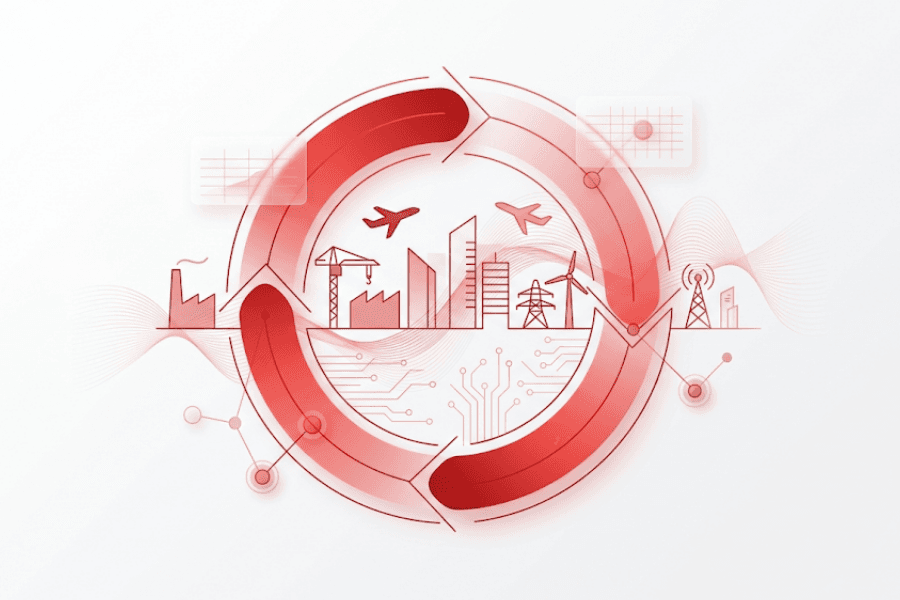
Industries naturally move through cycles of expansion, stability, slowdown, and recovery. These cycles significantly affect business risk, cash flow generation, profitability, borrowing capacity, and repayment ability.
As a result, understanding industry cycles is a fundamental part of credit rating analysis.
For promoters, CFOs, and finance teams, recognizing how rating agencies interpret industry dynamics can help improve financial planning, risk management, and long-term credit positioning.
Understanding Industry Cycles
Industry cycles refer to recurring patterns of growth and contraction within a sector over time.
Most industries do not grow in a straight line indefinitely. Instead, they experience phases influenced by:
economic growth,
consumer demand,
government policies,
interest rates,
commodity prices,
technological changes,
global trade trends,
and competitive intensity.
Typically, industries move through four broad phases:
Expansion Phase
During this stage:
demand rises,
capacity utilization improves,
profitability strengthens,
investments increase,
and funding access becomes easier.
Companies generally experience stronger financial performance and better liquidity.
Peak Phase
This phase reflects very strong industry performance, often characterized by:
high profitability,
aggressive expansion,
strong investor confidence,
and elevated valuations.
However, excessive optimism may also lead to overcapacity and higher leverage.
Slowdown or Contraction Phase
Demand weakens during this stage.
Companies may experience:
lower revenues,
margin pressure,
inventory buildup,
higher working capital requirements,
and reduced cash generation.
Weaker players often face financial stress during this phase.
Recovery Phase
As economic conditions improve, industries gradually stabilize.
Demand returns,
capacity utilization improves,
and financial performance begins recovering.
Rating agencies carefully evaluate where an industry currently stands within this cycle.
Why Industry Cycles Matter in Credit Ratings
Credit ratings fundamentally assess a company’s ability to meet its financial obligations on time.
Industry cycles directly influence this ability because they affect:
cash flows,
profitability,
liquidity,
debt servicing capacity,
and refinancing flexibility.
Even fundamentally strong companies may experience stress during adverse industry conditions.
Therefore, rating agencies incorporate industry outlooks into their overall credit assessments.
A company operating in a highly volatile or declining industry may face rating pressure despite reasonable standalone financials.
Conversely, companies operating in stable or growing sectors may benefit from supportive industry dynamics.
Business Risk Assessment and Industry Positioning
One of the most important aspects of rating analysis is business risk assessment.
Industry characteristics significantly shape this evaluation.
Rating agencies typically examine:
industry growth prospects,
cyclicality,
competitive intensity,
entry barriers,
pricing power,
demand stability,
regulatory risks,
and technological disruptions.
Industries with stable demand patterns are generally viewed more favorably than highly cyclical sectors.
For example:
utilities,
essential consumer products,
healthcare,
and regulated infrastructure sectors
often demonstrate relatively stable cash flows.
In contrast, industries such as:
real estate,
aviation,
shipping,
metals,
textiles,
and construction
may experience sharp fluctuations depending on economic cycles.
Cyclical Industries vs Defensive Industries
Rating agencies differentiate between cyclical and defensive sectors.
Cyclical Industries
These industries are highly sensitive to economic conditions.
Demand rises significantly during economic expansion and weakens sharply during downturns.
Examples include:
automobiles,
steel,
cement,
capital goods,
real estate,
hospitality,
and luxury products.
Companies in cyclical sectors are often assessed more conservatively because earnings volatility can affect repayment ability.
Defensive Industries
Defensive sectors generally maintain stable demand even during economic slowdowns.
Examples include:
pharmaceuticals,
utilities,
basic consumer goods,
telecommunications,
and healthcare services.
These industries usually demonstrate more predictable revenues and cash flows, which may support stronger credit profiles.
Industry Outlook and Rating Sensitivity
Rating agencies regularly publish sector outlooks reflecting their expectations regarding industry conditions.
These outlooks may be categorized as:
positive,
stable,
negative,
or evolving.
Industry outlooks influence rating sensitivity because they indicate expected pressure or support for future financial performance.
For example:
A negative outlook for the real estate sector may reflect concerns regarding demand slowdown, liquidity stress, or regulatory changes.
A positive outlook for renewable energy may reflect policy support, increasing investments, and strong long-term demand visibility.
Companies operating within sectors facing structural stress may encounter higher rating scrutiny.
Demand Cycles and Revenue Stability
Demand visibility is a critical consideration in credit assessments.
Industries with predictable demand patterns are generally viewed as lower risk.
For example:
electricity distribution,
essential food products,
healthcare,
and water utilities
typically experience relatively stable demand.
On the other hand, sectors dependent on discretionary spending or investment cycles may face higher volatility.
Examples include:
luxury consumption,
commercial real estate,
hospitality,
and infrastructure development.
Rating agencies assess whether companies can maintain stable cash generation during periods of weak demand.
Capacity Expansion and Overcapacity Risks
During favorable industry conditions, companies often undertake aggressive expansion.
While expansion may support future growth, excessive industry-wide capacity additions can create oversupply risks.
Overcapacity may lead to:
pricing pressure,
lower margins,
reduced capacity utilization,
and weaker cash flows.
Rating agencies closely monitor whether industry expansion is sustainable or excessive.
For example:
The steel, cement, shipping, and telecom industries have historically experienced periods where aggressive expansion created industry-wide stress.
Pricing Power and Competitive Dynamics
Industry cycles also influence pricing power.
In strong demand environments, companies may pass on higher costs to customers and maintain healthy margins.
However, during downturns:
competition intensifies,
price wars emerge,
and profit margins decline.
Rating agencies therefore evaluate:
market positioning,
brand strength,
customer diversification,
and operational efficiency
to determine whether companies can withstand industry pressure better than competitors.
Strong companies with superior cost structures often perform better during adverse cycles.
Commodity Price Exposure
Many industries are heavily exposed to commodity price movements.
Examples include:
metals,
oil and gas,
chemicals,
aviation,
power generation,
and manufacturing.
Commodity price volatility can significantly affect profitability.
For instance:
higher crude oil prices increase fuel costs,
rising coal prices affect power producers,
and fluctuating metal prices impact manufacturing margins.
Rating agencies evaluate how vulnerable companies are to such external shocks.
Companies with:
integrated operations,
long-term contracts,
or hedging mechanisms
may demonstrate stronger resilience.
Regulatory and Policy Risks
Industry cycles are often influenced by government actions and regulatory frameworks.
Changes in:
tax structures,
environmental regulations,
trade policies,
licensing norms,
or subsidy frameworks
can materially alter industry economics.
For example:
Changes in telecom regulations have historically impacted profitability and competition.
Environmental compliance requirements can increase costs for manufacturing industries.
Policy support can accelerate growth in renewable energy sectors.
Rating agencies therefore assess regulatory stability while evaluating industry risks.
Technological Disruption and Structural Industry Changes
Not all industry changes are temporary cycles.
Some industries experience structural transformation due to technological disruption.
Examples include:
digital transformation in media,
electric vehicle adoption in automobiles,
automation in manufacturing,
and fintech disruption in financial services.
Rating agencies assess whether companies can adapt to changing industry realities.
Failure to evolve with structural industry changes may weaken long-term business sustainability.
Global Linkages and International Industry Cycles
Many industries are globally interconnected.
International demand trends, geopolitical events, supply chain disruptions, and trade conditions can influence domestic industries significantly.
Export-oriented sectors such as:
IT services,
textiles,
engineering goods,
specialty chemicals,
and auto components
are particularly affected by global cycles.
Rating agencies therefore monitor both domestic and international industry conditions.
Financial Metrics Across Industry Cycles
Rating agencies evaluate whether companies can maintain reasonable financial metrics throughout industry volatility.
Key indicators assessed include:
operating margins,
interest coverage,
debt-to-EBITDA ratios,
cash flow generation,
working capital intensity,
and liquidity buffers.
Strong companies are expected to demonstrate resilience even during weak industry phases.
Temporary pressure may be acceptable if supported by:
strong liquidity,
financial flexibility,
or credible recovery visibility.
Management Strategy During Downcycles
Management quality becomes especially important during industry downturns.
Rating agencies assess whether management teams demonstrate:
financial discipline,
prudent leverage policies,
cost optimization measures,
timely corrective actions,
and realistic expansion strategies.
Companies that maintain conservative financial practices during strong cycles are often better positioned during downturns.
Aggressive leverage during peak industry phases may create vulnerabilities later.
Industry Cycles and Rating Transitions
Industry conditions frequently contribute to rating upgrades, downgrades, or outlook revisions.
Rating Upgrade Possibilities
Upgrades may occur when:
industry conditions improve sustainably,
demand strengthens,
profitability stabilizes,
leverage reduces,
and cash flows improve.
Rating Downgrade Risks
Downgrades may occur during prolonged industry stress resulting in:
weaker earnings,
liquidity pressure,
high debt burdens,
or refinancing challenges.
Rating agencies focus not only on current performance but also on sustainability across future cycles.
Importance of Through-the-Cycle Analysis
Credit ratings are generally intended to reflect medium- to long-term credit risk rather than short-term fluctuations.
Therefore, rating agencies often apply a “through-the-cycle” approach.
This means they evaluate whether companies can withstand adverse industry conditions over time instead of focusing only on temporary strong performance during favorable periods.
For example:
A company generating exceptionally high profits during a commodity boom may not automatically receive a significantly higher rating if those earnings are viewed as cyclical and unsustainable.
Similarly, temporary weakness during a short-term slowdown may not necessarily trigger severe rating actions if long-term fundamentals remain intact.
Examples of Industry Cycle Impact
Real Estate
The real estate sector is highly influenced by:
interest rates,
liquidity availability,
consumer sentiment,
and regulatory frameworks.
Industry slowdowns can sharply affect cash flows and project execution.
Steel and Metals
Metal industries are heavily exposed to global commodity cycles and demand fluctuations.
Periods of oversupply often pressure margins significantly.
Aviation
The aviation sector is vulnerable to fuel prices, demand volatility, and economic slowdowns.
Even large airlines may experience financial stress during adverse cycles.
Pharmaceuticals
Pharmaceuticals are relatively defensive but may still face regulatory and pricing risks.
Stable demand often supports stronger business risk profiles.
How Companies Can Strengthen Their Position Across Cycles
Companies cannot control industry cycles, but they can improve resilience through strategic planning.
Key approaches include:
maintaining prudent leverage,
building liquidity buffers,
diversifying revenue streams,
improving operational efficiency,
avoiding aggressive expansion during peak cycles,
strengthening governance practices,
and implementing effective risk management systems.
Companies that maintain discipline during favorable industry conditions are generally better prepared for downturns.
Conclusion
Industry cycles are a critical component of credit rating analysis because they directly affect corporate stability, profitability, liquidity, and repayment capacity.
Rating agencies recognize that even strong companies are influenced by the broader sectors in which they operate.
As a result, credit assessments extend beyond standalone financial performance to include industry outlooks, demand trends, competitive dynamics, regulatory risks, and cyclical vulnerabilities.
Understanding how rating agencies evaluate industry cycles helps businesses make more informed financial decisions, improve resilience, and build stronger long-term credit profiles.
Ultimately, sustainable credit strength is not measured only by performance during favorable conditions, but by a company’s ability to navigate industry volatility across economic cycles.