


Credit Ratings in the Renewable Energy Sector
By: admin
Articles
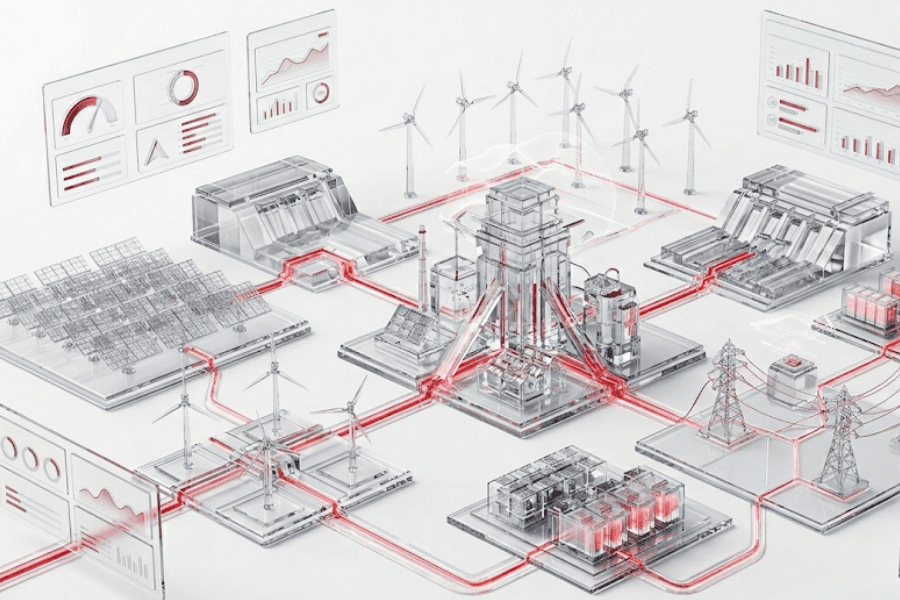
Credit Ratings in the Renewable Energy Sector
A Comprehensive Guide to Financial Stability, Policy Risk, and Long-Term Project Viability
The renewable energy sector has become one of the most strategically important industries in the global transition toward sustainable development. It includes solar power, wind energy, hydroelectric projects, biomass, and emerging technologies such as green hydrogen and battery storage systems.
While the sector offers long-term visibility and strong government support, it is also highly capital-intensive, policy-driven, and dependent on long-term cash flows. In this context, credit ratings play a critical role in evaluating financial strength, project stability, and repayment capacity.
A credit rating in the renewable energy sector is not just a reflection of financial performance—it is a structured assessment of project execution capability, policy risk exposure, counterparty strength, and revenue predictability.
This article provides a deep and structured understanding of how credit ratings are determined in the renewable energy sector, key influencing factors, challenges, and strategies for improvement.
1. Why Credit Ratings Matter in the Renewable Energy Sector
Renewable energy projects are long-term infrastructure assets with stable but structured cash flows. Financing these projects requires strong lender confidence.
1.1 Access to Long-Term Project Finance
Renewable energy projects typically require funding for:
Solar and wind plant installation
Land acquisition and development
Transmission infrastructure
Grid connectivity systems
Battery storage systems
Credit ratings help lenders evaluate:
Long-term repayment ability
Project viability
Cash flow predictability
A strong rating enables easier access to infrastructure financing and lower borrowing costs.
1.2 Cost of Capital and Project Viability
In renewable energy, profitability is highly sensitive to financing costs. Even a small change in interest rates can significantly impact project IRR (Internal Rate of Return).
A higher credit rating leads to:
Lower interest rates
Better refinancing opportunities
Improved project economics
1.3 Power Purchase Agreement (PPA) Credibility
Renewable energy projects rely heavily on long-term contracts such as PPAs with:
Government utilities
Private corporations
Distribution companies (DISCOMs)
Credit ratings help assess:
Counterparty strength
Payment security mechanisms
Contract stability
1.4 Investor and Institutional Confidence
Strong credit ratings attract:
Infrastructure funds
Green bonds investors
Private equity in clean energy
International climate financing institutions
2. Structure of the Renewable Energy Sector and Risk Profile
The renewable energy industry consists of multiple segments, each with distinct risk characteristics.
2.1 Solar Energy Projects
Characteristics:
High upfront capital costs
Declining technology costs
Stable generation patterns
Risks:
Weather dependency
Grid connectivity issues
Tariff competition
2.2 Wind Energy Projects
Characteristics:
Location-specific generation
High operational efficiency requirements
Long asset life cycles
Risks:
Wind variability
Land acquisition challenges
Maintenance costs
2.3 Hydro Power Projects
Characteristics:
Large-scale infrastructure
Long construction timelines
High capital intensity
Risks:
Environmental clearances
Geological uncertainties
Long gestation periods
2.4 Biomass Energy
Characteristics:
Localized fuel sourcing
Smaller project scale
Rural energy integration
Risks:
Supply chain inconsistency
Fuel price volatility
2.5 Emerging Technologies (Green Hydrogen, Storage Systems)
Characteristics:
High innovation dependence
Policy-driven demand
Early-stage market development
Risks:
Technology uncertainty
High initial costs
Regulatory evolution
3. Key Factors in Credit Rating of Renewable Energy Companies
Credit rating agencies such as CRISIL, ICRA, and CARE Ratings evaluate renewable energy companies using a mix of financial, contractual, operational, and policy-related parameters.
3.1 Financial Performance
Revenue Predictability
Key factor:
Stability of cash flows from PPAs
Fixed tariff structures
Long-term contract visibility
Renewable energy is considered more stable than many industries due to contracted revenue streams.
Profitability Margins
Margins depend on:
Tariff rates
Financing costs
Plant efficiency
Key indicators:
EBITDA margin
Net profit margin
Return on equity
Leverage and Debt Structure
Renewable energy is highly leveraged due to capital-intensive nature.
Key ratios:
Debt-to-equity ratio
Debt service coverage ratio (DSCR)
Interest coverage ratio
DSCR is one of the most critical rating metrics in this sector.
3.2 Power Purchase Agreements (PPA) Strength
This is the most important credit rating factor in renewable energy.
Agencies evaluate:
Counterparty credit quality (government vs private buyer)
Contract tenure (typically 15–25 years)
Tariff structure stability
Payment security mechanisms
Strong PPAs significantly improve credit ratings.
3.3 Policy and Regulatory Risk
Renewable energy depends heavily on government policies:
Subsidies and incentives
Renewable purchase obligations (RPOs)
Tax benefits
Import/export duties on equipment
Policy uncertainty can directly impact project viability.
3.4 Operational Efficiency
Key performance indicators include:
Plant load factor (PLF)
Capacity utilization
Equipment efficiency
Downtime levels
Maintenance effectiveness
Higher efficiency improves cash flow stability.
3.5 Technology and Equipment Risk
Agencies assess:
Quality of solar panels or wind turbines
Technology lifespan
Supplier reliability
Maintenance requirements
Technology obsolescence risk is a key consideration.
3.6 Project Execution Capability
Evaluation includes:
Timely commissioning of projects
Cost control during construction
EPC contractor performance
Engineering and design capability
Strong execution reduces financial and operational risk.
3.7 Counterparty Risk
Renewable energy projects depend heavily on:
Government utilities (DISCOMs)
Corporate buyers
Industrial offtakers
Payment delays or weak counterparties can impact ratings.
3.8 Geographic and Resource Risk
Agencies consider:
Solar irradiation levels (for solar projects)
Wind speed consistency (for wind projects)
Land availability and quality
Grid connectivity
Resource stability is crucial for long-term revenue predictability.
4. Credit Rating Process in Renewable Energy Companies
Step 1: Data Collection
Includes:
Financial statements
PPA agreements
Project documentation
Debt agreements
Step 2: Management Interaction
Focus areas:
Project pipeline
Expansion strategy
Financing structure
Risk mitigation plans
Step 3: Technical and Operational Review
Assessment of:
Plant performance
Capacity utilization
Equipment reliability
Step 4: Financial Analysis
Includes:
Cash flow modeling
DSCR analysis
Stress testing under tariff or generation changes
Step 5: Rating Committee Decision
Final rating reflects integrated assessment of:
Financial stability
Contract strength
Operational efficiency
Policy environment
5. Common Credit Rating Challenges in Renewable Energy Sector
5.1 High Initial Capital Requirement
Projects require large upfront investments.
5.2 Dependence on Policy Framework
Government policy changes can affect viability.
5.3 Counterparty Payment Delays
DISCOM delays remain a significant concern.
5.4 Weather and Resource Variability
Generation depends on natural conditions.
5.5 Technology Risk
Rapid technological advancements may affect asset value.
5.6 High Leverage Structure
Projects are typically financed through high debt ratios.
6. How Renewable Energy Companies Can Improve Credit Ratings
6.1 Strengthen PPA Quality
Focus on government-backed contracts
Prefer strong corporate offtakers
Ensure long-term tariff stability
6.2 Improve Financial Structure
Maintain healthy DSCR levels
Optimize debt repayment schedules
Reduce refinancing risk
6.3 Enhance Operational Efficiency
Improve plant load factor
Reduce downtime
Invest in high-quality equipment
6.4 Diversify Revenue Sources
Mix solar, wind, and hybrid projects
Explore storage and hybrid systems
6.5 Strengthen Project Execution
Partner with reliable EPC contractors
Ensure timely project completion
Maintain strict cost control
6.6 Improve Counterparty Management
Prefer secure payment mechanisms
Use escrow arrangements where possible
7. Impact of Credit Ratings on Renewable Energy Growth
7.1 Lower Cost of Capital
Even small reductions in interest rates significantly improve project economics.
7.2 Faster Project Expansion
Strong ratings enable:
Easier debt approvals
Faster financial closure
Larger project pipelines
7.3 Increased Investor Confidence
Attracts:
Green bond investors
ESG-focused funds
Infrastructure investors
7.4 Competitive Advantage in Bidding
Companies with stronger ratings can:
Bid more aggressively
Secure large-scale projects
Build long-term portfolios
8. Future of Credit Ratings in Renewable Energy Sector
8.1 Green Financing Expansion
Growth of:
Green bonds
Sustainability-linked loans
Climate finance instruments
8.2 ESG Integration in Ratings
Future ratings will strongly consider:
Carbon reduction impact
Environmental compliance
Sustainability reporting
8.3 Energy Storage and Hybrid Systems
Battery storage and hybrid renewable systems will reshape risk models.
8.4 Digital Monitoring of Energy Assets
Real-time tracking of:
Power generation
Plant performance
Maintenance cycles
will enhance transparency.
Conclusion
Credit ratings in the renewable energy sector are a critical measure of financial strength, project stability, and long-term sustainability. Unlike many industries, renewable energy is characterized by long-term contracts, policy dependency, and high capital investment, making credit assessment highly structured and forward-looking.
Companies that focus on strong PPAs, disciplined financial management, operational efficiency, and risk diversification are better positioned to achieve strong credit ratings.
In the renewable energy sector, a strong credit rating is not just a financial metric—it is a foundation for growth, investor trust, and long-term sustainable development.