


Credit Ratings for Export-Oriented Businesses
By: admin
Articles
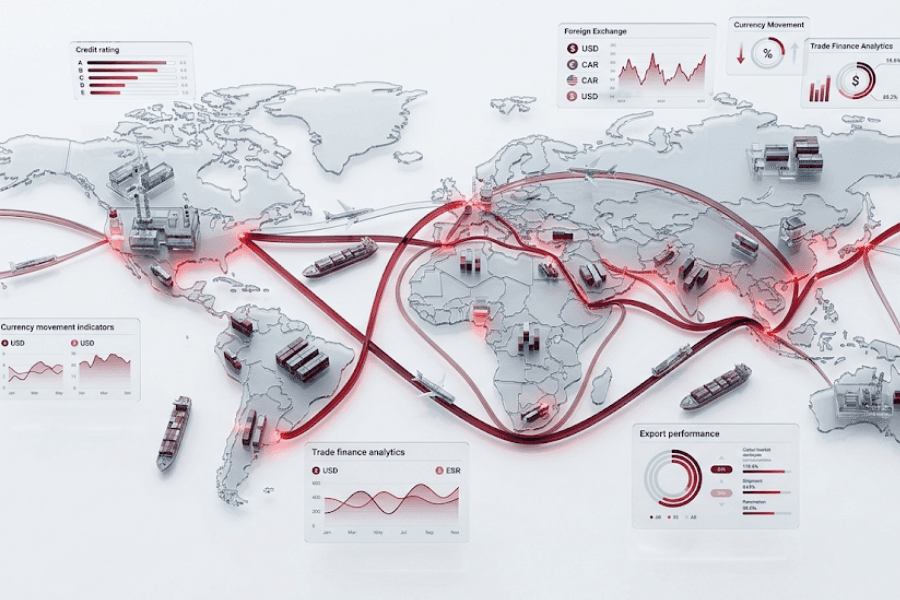
Credit Ratings for Export-Oriented Businesses
A Comprehensive Guide to Financial Stability, Trade Risk, and Global Competitiveness
Export-oriented businesses operate at the intersection of domestic production and global demand. They supply goods and services to international markets and are deeply influenced by currency movements, geopolitical conditions, trade regulations, and global economic cycles.
Because of this exposure, credit ratings for export-oriented companies are not limited to financial performance alone—they also reflect foreign exchange risk management, buyer concentration, shipment reliability, trade financing discipline, and global market stability.
A credit rating in export businesses is therefore a structured assessment of financial strength, export sustainability, and resilience to global volatility.
1. Why Credit Ratings Matter for Export-Oriented Businesses
Export companies depend heavily on trust, liquidity, and timely execution of international contracts. Credit ratings directly influence all three.
1.1 Access to Export Finance
Exporters require continuous funding for:
Raw material procurement
Manufacturing and processing
Freight and logistics
Pre-shipment and post-shipment working capital
Banks and financial institutions rely on credit ratings to determine:
Export credit limits
Packing credit approvals
Foreign currency loan eligibility
A strong credit rating ensures uninterrupted access to trade finance.
1.2 Foreign Buyer Confidence
International buyers evaluate supplier credibility based on:
Financial stability
Delivery consistency
Payment risk
A strong credit rating enhances trust and helps secure:
Long-term supply contracts
Bulk purchase agreements
Repeat international orders
1.3 Better Trade Terms and Pricing Power
Exporters with strong credit profiles can negotiate:
Advance payments
Shorter credit cycles
Better pricing contracts
Lower discounting pressure
1.4 Currency Hedging and Risk Management Support
Creditworthy exporters get better access to:
Forward contracts
Hedging instruments
Forex derivative products
This reduces exposure to currency fluctuations.
2. Structure of Export-Oriented Businesses and Risk Profile
Export businesses span multiple industries, each with unique risk characteristics.
2.1 Textile and Apparel Exports
Characteristics:
Labor-intensive
High volume, low margin
Seasonal demand cycles
Risks:
Price competition from global markets
Fashion demand volatility
2.2 Engineering and Industrial Exports
Characteristics:
High-value contracts
Long delivery cycles
Technical specifications
Risks:
Execution delays
Certification and compliance requirements
2.3 Agro and Food Exports
Characteristics:
Commodity-based
Quality-sensitive
Seasonal production
Risks:
Price volatility
Regulatory restrictions
2.4 Chemical and Pharmaceutical Exports
Characteristics:
High compliance requirements
Strong global demand
Regulated markets
Risks:
Regulatory approvals
Environmental compliance
2.5 IT and Service Exports
Characteristics:
Low capital intensity
Human resource-driven
Recurring contracts
Risks:
Client concentration
Currency dependency
3. Key Factors in Credit Rating of Export Businesses
Credit rating agencies such as CRISIL, ICRA, and CARE Ratings evaluate export-oriented companies based on financial, operational, and external risk factors.
3.1 Financial Performance
Revenue Stability
Key considerations:
Export order book strength
Geographic diversification
Repeat international customers
Stable export contracts improve rating strength.
Profitability Margins
Export margins are influenced by:
Global pricing competition
Freight and logistics costs
Currency movements
Key metrics:
EBITDA margin
Net profit margin
Operating leverage efficiency
Leverage Position
Important ratios:
Debt-to-equity ratio
Interest coverage ratio
Export finance utilization
High working capital borrowing is common in export businesses.
3.2 Foreign Exchange Risk
One of the most critical rating factors in export businesses.
Agencies assess:
Natural hedging (imports vs exports balance)
Currency hedging policies
Exposure to USD, EUR, GBP volatility
Impact of forex losses on profitability
Poor forex management can severely weaken credit ratings.
3.3 Export Market Diversification
Credit ratings improve when exports are diversified across:
Multiple countries
Multiple continents
Multiple buyer categories
High dependency on a single country increases geopolitical risk exposure.
3.4 Buyer Concentration Risk
Agencies evaluate:
Share of top 5 buyers
Dependency on large international retailers
Long-term contract stability
High concentration increases revenue volatility risk.
3.5 Working Capital Management
Export businesses are highly working capital intensive due to:
Raw material procurement cycles
Production lead times
Shipping delays
Payment credit periods
Key indicators:
Inventory holding period
Receivable days (export credit cycles)
Cash conversion cycle
Efficient working capital management supports stronger ratings.
3.6 Logistics and Supply Chain Efficiency
Export performance depends on:
Port connectivity
Freight cost management
Shipping reliability
Customs clearance efficiency
Delays in logistics can affect both revenue and reputation.
3.7 Compliance and Regulatory Risk
Export companies must comply with:
International trade regulations
Quality certifications (ISO, FDA, etc.)
Environmental standards
Customs documentation requirements
Non-compliance can lead to shipment rejection or penalties.
3.8 Management Quality and Global Capability
Strong emphasis is placed on:
Export experience of promoters
International negotiation capability
Risk management systems
Financial discipline
Global market understanding
4. Credit Rating Process for Export Companies
Step 1: Data Collection
Includes:
Financial statements
Export invoices and shipment records
Buyer contracts
Bank statements
Step 2: Management Interaction
Focus areas:
Export strategy
Market expansion plans
Risk hedging practices
Step 3: Industry and Market Analysis
Evaluation of:
Global demand trends
Commodity pricing cycles
Trade policies
Step 4: Financial Analysis
Includes:
Ratio analysis
Cash flow stability
Forex impact assessment
Step 5: Rating Committee Decision
Final rating reflects:
Financial strength
Export sustainability
Risk exposure profile
5. Common Credit Rating Challenges in Export Businesses
5.1 Currency Volatility
Exchange rate fluctuations impact profitability directly.
5.2 Buyer Dependency
Heavy reliance on few international buyers increases risk.
5.3 Payment Delays
Long credit cycles (60–180 days) strain liquidity.
5.4 Freight and Logistics Costs
Global shipping cost volatility affects margins.
5.5 Regulatory Barriers
Different countries impose varying trade restrictions.
5.6 High Working Capital Needs
Continuous funding is required for production and shipping cycles.
6. How Export-Oriented Businesses Can Improve Credit Ratings
6.1 Strengthen Forex Risk Management
Use hedging instruments
Maintain natural hedges
Reduce unprotected currency exposure
6.2 Diversify Export Markets
Expand into multiple geographies
Reduce dependency on single-country exports
Target emerging markets
6.3 Improve Working Capital Efficiency
Faster receivable realization
Efficient inventory planning
Structured export credit cycles
6.4 Strengthen Buyer Base
Reduce dependency on top buyers
Build long-term contracts with multiple clients
6.5 Enhance Operational Efficiency
Improve production timelines
Reduce wastage and rejections
Optimize logistics planning
6.6 Improve Financial Structure
Maintain healthy leverage ratios
Strengthen internal accruals
Optimize export credit utilization
7. Impact of Credit Ratings on Export Businesses
7.1 Lower Cost of Export Finance
Better ratings reduce:
Packing credit costs
Foreign currency loan interest rates
7.2 Increased Global Competitiveness
Strong ratings improve:
Buyer confidence
Contract acquisition ability
Market reputation
7.3 Faster Business Expansion
Improved access to:
Trade finance
Working capital limits
Export incentives
7.4 Better Supplier and Freight Terms
Strong credit profiles help negotiate:
Raw material credit terms
Freight discounts
Logistic partnerships
8. Future of Credit Ratings in Export-Oriented Businesses
8.1 Global Supply Chain Realignment
Companies shifting sourcing from China open new export opportunities but increase competition.
8.2 Digital Trade Financing
Use of:
Blockchain-based trade documentation
Digital LC systems
AI-driven credit assessment
8.3 ESG and Sustainability Standards
Global buyers increasingly demand:
Sustainable sourcing
Ethical manufacturing
Carbon footprint reporting
8.4 Real-Time Export Monitoring
Credit agencies are moving toward:
Continuous financial tracking
Shipment-based performance evaluation
Live risk monitoring
Conclusion
Credit ratings for export-oriented businesses reflect far more than financial performance—they capture global competitiveness, trade discipline, risk management capability, and operational reliability in international markets.
Given the exposure to currency fluctuations, buyer concentration, logistics challenges, and regulatory complexity, maintaining a strong credit rating requires disciplined financial management, market diversification, and robust risk mitigation strategies.
Companies that build strong export networks, manage forex risk effectively, and maintain financial stability are best positioned to achieve strong credit ratings and sustainable global growth.
In export businesses, a strong credit rating is not just a financial benchmark—it is a passport to global credibility, expansion, and long-term success.