


CFO Alert: 3 Immediate Steps to Take When Your Rating Drops from Investment Grade to Junk
By: admin
Articles

CFO Alert: 3 Immediate Steps to Take When Your Rating Drops from Investment Grade to Junk
In the financial ecosystem of Mumbai, a credit rating downgrade is not just a technical adjustment.
It is a market signal that can immediately impact borrowing cost, liquidity, and stakeholder confidence.
But when a company falls from investment grade to below investment grade (junk category), the implications become far more serious.

This is not a situation for gradual correction.
It demands immediate, strategic action.
What This Downgrade Really Means
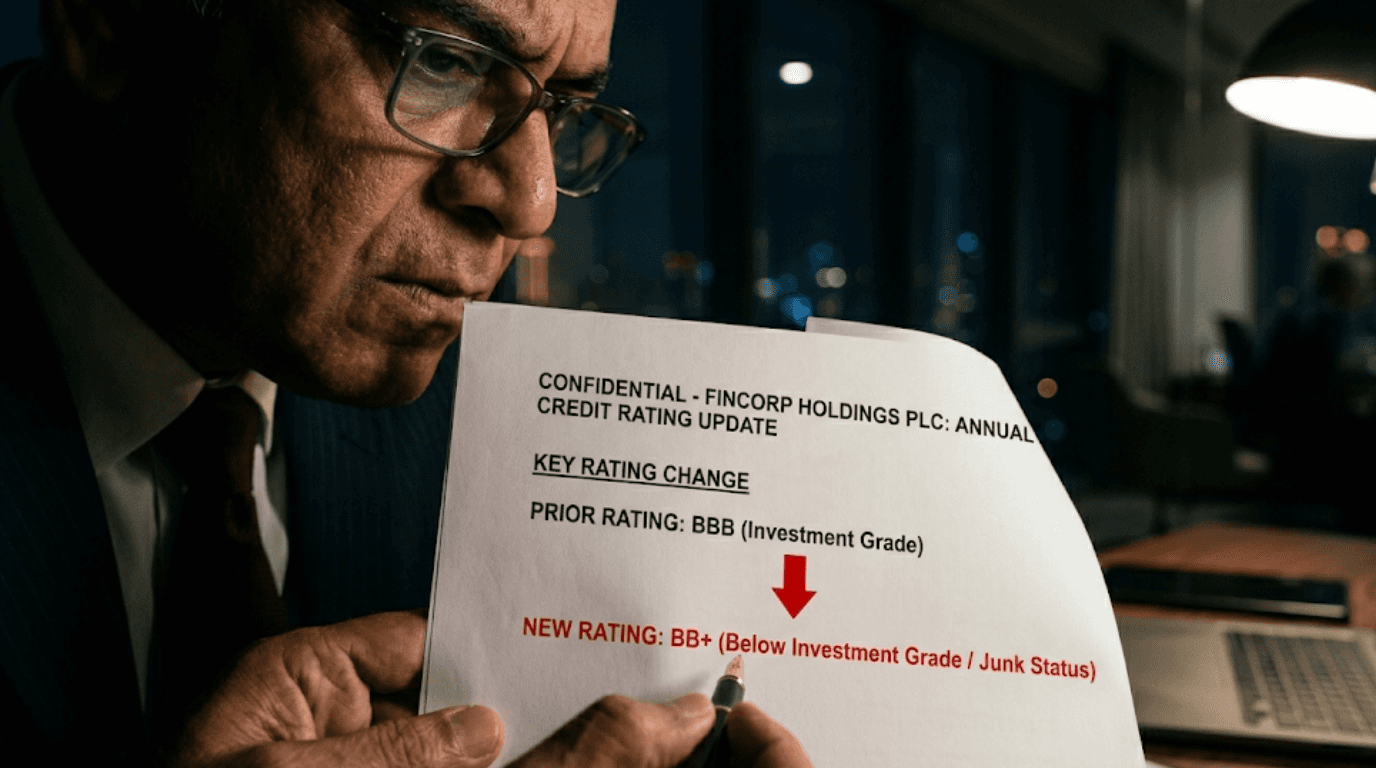
A downgrade from investment grade (BBB− and above) to junk status signals a higher perceived risk of default.
This can trigger:
Increase in borrowing costs
Withdrawal or tightening of bank limits
Investor exits in debt instruments
Stricter covenants and monitoring
In many cases, lenders reassess exposure almost immediately.
Why Speed Matters
Credit markets react quickly to rating changes.
Delays in response can lead to:
Liquidity stress
Loss of refinancing opportunities
Negative market perception
The first 30 to 60 days after a downgrade are critical.
This period determines whether the situation stabilizes or escalates.

Step 1: Stabilize Liquidity Immediately
The first priority is to ensure uninterrupted cash flow and debt servicing capability.
CFOs should:
Assess current liquidity position including cash, undrawn limits, and inflows
Prioritize critical payments such as interest obligations and operational expenses
Engage with lenders to prevent sudden tightening of facilities
If required:
Renegotiate short-term obligations
Explore bridge financing or promoter support
The objective is simple:
Avoid any signal of stress that could trigger further downgrades.

Step 2: Engage Proactively with Lenders and Stakeholders
Silence after a downgrade increases uncertainty.
CFOs must immediately:
Communicate with banks, NBFCs, and key lenders
Provide clarity on reasons behind the downgrade
Share corrective action plans
Reassure stakeholders about business continuity
Transparent communication helps:
Maintain lender confidence
Prevent abrupt withdrawal of support
Buy time for corrective measures
Step 3: Initiate a Structured Rating Recovery Plan

A downgrade is not permanent. But recovery requires deliberate and structured action.
This includes:
Identifying Root Causes
Understanding whether the downgrade was driven by:
Financial deterioration
Liquidity issues
Governance concerns
Industry challenges
Implementing Corrective Measures
Reducing leverage
Improving cash flows
Strengthening working capital management
Enhancing financial discipline
Rebuilding the Rating Narrative
Ensuring that:
Improvements are clearly documented
Strengths are effectively communicated
Future outlook is convincingly presented
What Not to Do After a Downgrade
Many companies make critical mistakes during this phase:
Ignoring communication with lenders
Focusing only on numbers without addressing perception
Delaying corrective action
Approaching rating agencies without preparation
These actions can worsen the situation.
The Strategic Insight Most CFOs Miss
A downgrade is not just about deteriorating metrics.
It is about how those metrics are interpreted.
Two companies facing similar stress can have different outcomes based on:
Speed of response
Quality of communication
Effectiveness of recovery strategy
Why This Matters More in Mumbai
Companies in Mumbai operate in a highly interconnected financial ecosystem.
Here:
Lenders share information quickly
Market perception shifts rapidly
Funding access is highly sensitive to rating changes
This makes swift and structured action even more critical.
Turning Crisis into Opportunity
Handled correctly, a downgrade can become a turning point.
It forces companies to:
Strengthen financial discipline
Improve transparency
Optimize capital structure
Many companies emerge stronger after a well-managed recovery process.
Conclusion: Control the Narrative Before It Controls You
A fall from investment grade to junk is serious, but it is not irreversible.
The key lies in:
Acting quickly
Communicating clearly
Executing a structured recovery plan
In credit markets, perception follows action.
The sooner the right actions are taken, the faster confidence can be restored.
Why Companies Choose FinMen Advisors for Credit Rating Advisory

Managing a rating downgrade requires more than financial correction. It requires the ability to stabilize perception, engage stakeholders, and strategically rebuild the rating profile.
FinMen Advisors brings a structured and experience-driven approach to rating recovery.
With over 15 years of specialized expertise, the firm understands how rating agencies and lenders respond during stress situations.
Having executed more than 6,500 assignments, it has strong experience in managing complex rating scenarios, including downgrades and recoveries.
Its pan-India presence and relationships with rating agencies and financial institutions provide a strategic advantage during the recovery process.
The Prepare, Position, Protect approach ensures that companies are not only stabilized but also positioned for future rating improvement.
A no-cost initial assessment helps businesses evaluate the impact of the downgrade and define a clear recovery roadmap.
Each engagement is customized to align with the company’s financial challenges, industry dynamics, and long-term objectives.
The Bottom Line
A rating downgrade is not just a financial event. It is a test of leadership and strategy.
Credit rating recovery is possible, but only with timely action and the right approach.
With strong execution and advisory support, companies can stabilize their position, rebuild confidence, and work toward regaining investment grade status.