


When Should a Company Engage a Credit Rating Advisor?
By: admin
Articles
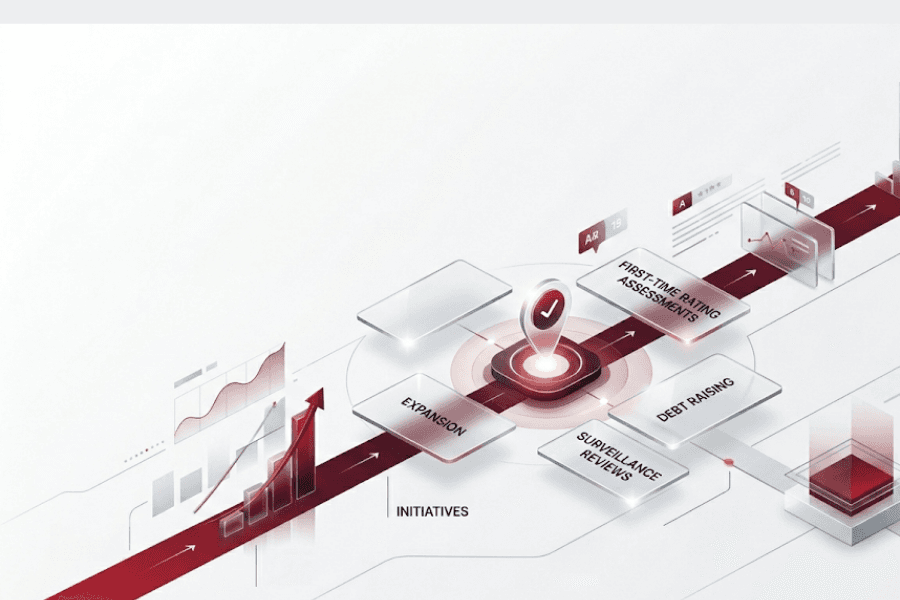
When Should a Company Engage a Credit Rating Advisor?
Understanding the Right Time to Seek Credit Rating Advisory Support
Many businesses begin thinking about credit rating advisory only after deciding to obtain a credit rating.
By that stage, management teams are often focused on documentation, financial information, stakeholder discussions, and timelines. While advisory support can certainly be valuable during this period, companies that engage advisors earlier often gain additional benefits through better preparation and a clearer understanding of their credit profile.
This raises an important question:
When is the right time for a company to engage a credit rating advisor?
The answer varies depending on the organization's objectives, growth stage, financing plans, and familiarity with the credit rating process.
Some companies seek advisory support before their first rating assessment. Others engage advisors during financing initiatives, expansion plans, or surveillance reviews. In many cases, businesses benefit from advisory support long before a formal rating assessment begins.
This article explores the situations in which companies commonly engage credit rating advisors and how early preparation can contribute to a more organized and informed credit rating journey.
Understanding the Role of a Credit Rating Advisor
Before discussing timing, it is important to understand what a credit rating advisor does.
A credit rating advisor does not assign ratings.
Nor can an advisor influence the independent assessment or decision-making process of a credit rating agency.
Credit rating agencies independently evaluate businesses and assign ratings based on their methodologies and analytical frameworks.
A credit rating advisor serves a different purpose.
Advisors help businesses:
Understand the credit rating process
Assess their current position
Identify key credit drivers
Organize information
Support management preparedness
Understand surveillance requirements
Develop awareness of factors that influence credit profiles
The objective is to help companies navigate the process with greater clarity and preparedness.
Situation 1: Before Applying for a Credit Rating
One of the most effective times to engage a credit rating advisor is before formally initiating the credit rating process.
Many businesses assume that preparation begins only after selecting a rating agency.
In reality, preparation often starts much earlier.
Before entering the process, companies may benefit from understanding:
Their current credit profile
Key business strengths
Potential areas of concern
Information requirements
Industry-specific considerations
Engaging an advisor at this stage allows management to approach the process more strategically.
Situation 2: During a First-Time Credit Rating Assessment
First-time rating assessments can be particularly challenging.
Many businesses are unfamiliar with:
Rating methodologies
Documentation requirements
Information requests
Management discussions
Assessment timelines
As a result, management teams often spend significant time learning the process while simultaneously responding to information requests.
Credit rating advisors can help first-time participants understand expectations and prepare more effectively.
This is one of the most common reasons companies seek advisory support.
Situation 3: Before Seeking Bank Finance
Credit ratings often play an important role in financing discussions.
Businesses planning to:
Raise working capital limits
Secure term loans
Refinance existing debt
Expand banking relationships
may choose to better understand their credit profile before approaching lenders.
A credit rating advisor can help management evaluate factors that lenders and stakeholders often consider when assessing financial strength and creditworthiness.
Situation 4: During Business Expansion Plans
Growth initiatives often create new opportunities as well as new financial and operational complexities.
Examples include:
Capacity expansion
Geographic expansion
New product lines
Acquisitions
Infrastructure investments
As businesses grow, their financing requirements, risk profiles, and stakeholder expectations may evolve.
Many organizations engage advisors during expansion phases to better understand how these developments fit into their broader credit profile.
Situation 5: Before Raising Debt Capital
Companies planning to raise debt capital often seek a deeper understanding of how external stakeholders may evaluate their business.
This may include:
Existing financial position
Cash flow generation
Debt servicing capacity
Business stability
Industry outlook
Credit rating advisory can help management organize and evaluate relevant information before entering the process.
Situation 6: When Management Wants an Independent Perspective
Internal teams understand their business better than anyone else.
However, because they are deeply involved in day-to-day operations, they may not always view the business from an external stakeholder's perspective.
A credit rating advisor can provide an independent and objective review of:
Business strengths
Financial profile
Industry positioning
Potential risk factors
This external perspective often helps management identify areas that may otherwise be overlooked.
Situation 7: When Documentation and Information Are Not Well Organized
One of the most common challenges businesses face is information management.
Data often exists across multiple departments, including:
Finance
Operations
Sales
Procurement
Human Resources
Strategy
Gathering and organizing information for a credit rating assessment can be time-consuming.
Companies frequently engage advisors when they need support creating a structured approach to documentation and information management.
Situation 8: Before Management Discussions
Management interactions often form an important part of the credit rating process.
Senior executives may be expected to discuss:
Business strategy
Industry outlook
Growth plans
Operational performance
Risk management practices
Financial policies
Businesses sometimes engage advisors before these discussions to ensure management teams are adequately prepared and supporting information is readily available.
Situation 9: During Periods of Significant Business Change
Major business developments often influence how stakeholders evaluate an organization.
Examples include:
Ownership changes
Strategic restructuring
New business verticals
Large capital investments
Changes in financing structure
Such developments may create new opportunities as well as new risks.
Credit rating advisors can help management understand how these changes fit within the company's broader business and financial profile.
Situation 10: Before Surveillance Reviews
Many businesses focus on obtaining a rating and pay less attention to what follows.
However, ratings are often subject to ongoing surveillance and periodic reviews.
These reviews may consider:
Financial performance
Business developments
Industry conditions
Debt levels
Liquidity position
Strategic initiatives
Companies often engage advisors before surveillance reviews to better understand evolving expectations and maintain preparedness.
Situation 11: When Internal Teams Have Limited Capacity
Finance teams are responsible for numerous critical functions, including:
Accounting
Compliance
Treasury management
Budgeting
Banking relationships
Reporting
Preparing for a credit rating assessment can require substantial time and coordination.
Even highly capable teams may face resource constraints.
In such situations, advisory support can help reduce administrative burdens and improve process efficiency.
Situation 12: When the Company Wants to Better Understand Its Credit Profile
Not every business engages a credit rating advisor because it needs a rating immediately.
Some companies simply want a deeper understanding of:
Financial strengths
Business risks
Industry positioning
Credit profile drivers
Areas requiring attention
This understanding can support broader financial planning and strategic decision-making.
Is There Such a Thing as "Too Early"?
In most cases, no.
The earlier management understands its credit profile, the more time it has to:
Improve internal processes
Organize information
Strengthen reporting systems
Address potential concerns
Enhance preparedness
Waiting until the last moment often creates unnecessary pressure and limits preparation time.
For this reason, many businesses view credit rating advisory as an ongoing strategic resource rather than a one-time service.
Signs Your Company May Benefit from Credit Rating Advisory
You may benefit from advisory support if:
You are pursuing your first credit rating.
You are planning to raise debt or bank finance.
Your business is expanding rapidly.
Documentation is difficult to organize.
Management has limited experience with rating assessments.
You want an independent perspective on your credit profile.
A surveillance review is approaching.
Internal teams have limited bandwidth.
These situations often create opportunities where advisory expertise can add value.
How FinMen Advisors Supports Businesses Throughout the Journey
For more than 15 years, FinMen Advisors has supported businesses across industries through its Prepare–Position–Protect methodology.
Prepare
Understand the business, financial profile, industry dynamics, and key credit drivers.
Position
Help businesses organize and communicate their strengths, capabilities, and strategic direction effectively.
Protect
Support long-term awareness of surveillance requirements and evolving credit profile considerations.
This structured approach enables companies to engage advisory support at various stages of their credit rating journey—not just when an assessment is imminent.
FinMen Advisors at a Glance
15+ Years of Credit Rating Advisory Experience
21,000+ Initial Assessments Conducted
6,500+ Assignments Completed
31+ Industry Sectors Served
80+ Professionals
Pan-India Presence
These milestones reflect extensive experience helping organizations understand and navigate the credit rating process across a wide range of industries and business situations.
Conclusion
There is no single "perfect" time to engage a credit rating advisor.
However, businesses often derive the greatest value when advisory support begins before critical financing, growth, or rating-related decisions are made.
Whether preparing for a first-time rating assessment, planning expansion, raising debt, approaching a surveillance review, or simply seeking a better understanding of their credit profile, companies can benefit from structured guidance and independent perspective.
Rather than viewing credit rating advisory as a reactive service, many organizations increasingly see it as a proactive step toward stronger preparedness, better organization, and a clearer understanding of the factors that shape their credit profile.
By engaging at the right time, businesses can approach the credit rating process with greater confidence, efficiency, and strategic awareness.