


What to Expect After Submitting Rating Documents
By: admin
Articles
What to Expect After Submitting Rating Documents
For many businesses, the submission of documents to a credit rating agency feels like the completion of a major task.
Financial statements have been prepared. Bank details have been organized. Operational information has been compiled. Management discussions have been scheduled. Internal teams have spent weeks coordinating information requests.
However, from the perspective of the rating process, document submission is not the end of the journey. In reality, it marks the beginning of the most critical phase of the assessment.
Many companies, especially first-time borrowers or mid-sized enterprises, assume that once documents are submitted, the rating agency simply calculates ratios and issues a rating. The actual process is significantly more detailed, analytical, and interactive.
Understanding what happens after submission helps management teams prepare better, respond efficiently, avoid delays, and improve the quality of representation before the rating committee.
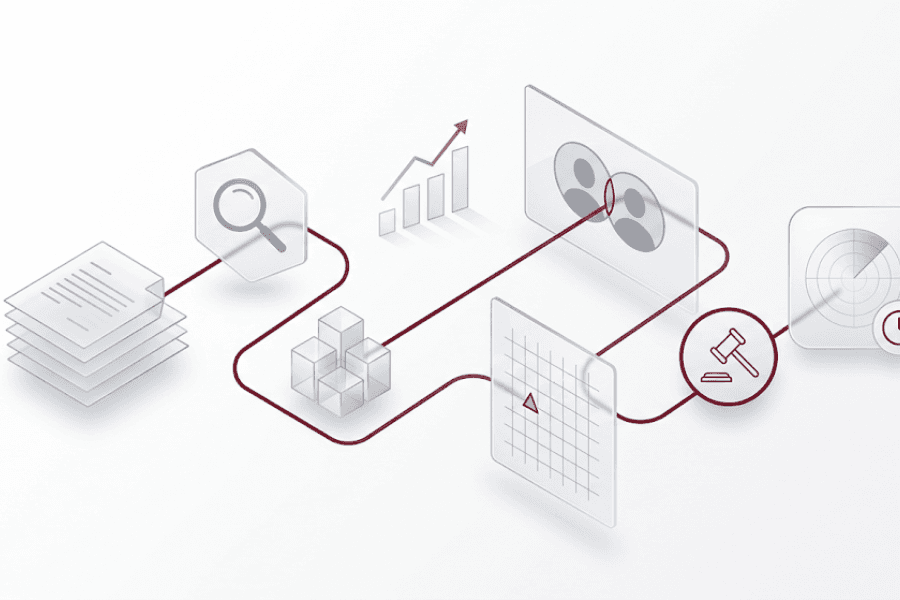
This article explains the stages that generally follow the submission of rating documents and what companies should realistically expect during the process.
Why the Post-Submission Phase Matters
A credit rating is not based only on submitted financial statements.
Rating agencies evaluate:
Business risk profile
Financial risk profile
Industry position
Management quality
Cash flow stability
Banking conduct
Liquidity profile
Governance standards
Future business outlook
Group support considerations
Risk management practices
The post-submission stage allows agencies to validate, interpret, and analyze these factors in depth.
This phase often determines whether the agency develops confidence in the company’s long-term financial stability.
Step 1: Initial Review and Data Validation
Once documents are submitted, the analytical team begins reviewing the information for completeness and consistency.
This usually includes verification of:
Audited financial statements
Provisional financials
Bank sanction letters
Repayment schedules
GST returns
Debtor and creditor statements
Stock statements
Project details
Cash flow projections
Existing loan facilities
Related-party transactions
Shareholding patterns
At this stage, analysts often identify gaps, inconsistencies, or areas requiring clarification.
For example:
Differences between GST turnover and audited revenue
Sudden changes in margins
Significant related-party balances
Large contingent liabilities
High receivable cycles
Sharp debt increases
Unusual cash flow movements
Companies should expect follow-up queries after submission.
This is normal and forms an essential part of the analytical process.
Step 2: Additional Information Requests
Most rating assignments involve multiple rounds of information exchange.
Analysts may request:
Updated monthly operational data
Order book details
Segment-wise revenue breakup
Customer concentration analysis
Supplier dependency details
Plant utilization information
Working capital cycle explanations
Capex plans
Future funding requirements
Details of ongoing litigation
Tax disputes
Group company exposures
In some cases, agencies may ask for information that management initially considered non-material.
However, rating agencies attempt to assess both visible and hidden financial risks.
Delays in responding to information requests can extend the rating timeline and sometimes create negative perceptions regarding transparency or internal controls.
Step 3: Detailed Financial Analysis
After sufficient data is received, analysts begin a deeper assessment of the company’s financial profile.
This usually includes evaluation of:
Profitability
Agencies analyze:
EBITDA margins
PAT margins
Return on capital employed
Sustainability of profitability
Margin volatility
Cost structure efficiency
The focus is not only on current profitability but also on whether profits are sustainable across business cycles.
Leverage
Debt levels are carefully evaluated through metrics such as:
Total debt to EBITDA
Debt-equity ratio
Interest coverage ratio
Net worth position
Debt servicing capability
Even profitable companies may face rating pressure if leverage becomes excessive.
Liquidity
Liquidity is one of the most critical areas of analysis.
Analysts assess:
Working capital utilization
Cash balances
Free cash flow generation
Repayment obligations
Bank limits utilization
Cushion available for contingencies
A company may report strong profits but still face rating concerns if liquidity remains stretched.
Cash Flow Stability
Cash flow quality often carries greater importance than accounting profits.
Agencies examine:
Operating cash flow trends
Cash conversion efficiency
Working capital intensity
Dependence on short-term borrowings
Timing mismatches between inflows and outflows
Businesses with predictable cash flows are generally viewed more favorably.
Step 4: Industry and Business Risk Assessment
The company is not evaluated in isolation.
Rating agencies compare the business against industry peers and broader sector risks.
Analysts assess factors such as:
Industry cyclicality
Competitive intensity
Entry barriers
Demand outlook
Regulatory risks
Raw material volatility
Customer concentration
Technological disruption
Exposure to imports or exports
For example:
Infrastructure companies may face execution risks
Textile companies may face export-related volatility
Real estate businesses may face regulatory and liquidity concerns
Commodity-linked sectors may face margin fluctuations
Even financially stable companies may face rating constraints if industry conditions are weak.
Step 5: Management Interaction
One of the most important stages after document submission is the management discussion.
This interaction helps analysts understand qualitative aspects that numbers alone cannot explain.
Management meetings usually cover:
Business model
Growth strategy
Risk management practices
Future expansion plans
Debt strategy
Banking relationships
Customer diversification
Industry outlook
Succession planning
Governance practices
The quality of management interaction can significantly influence analytical comfort.
Agencies generally value:
Transparency
Clarity of explanation
Consistency in responses
Realistic projections
Strong understanding of business risks
Overly aggressive claims or unrealistic growth assumptions may reduce analytical confidence.
Step 6: Site Visits and Operational Understanding
In many cases, analysts may conduct plant visits or operational reviews.
The objective is to understand:
Scale of operations
Capacity utilization
Production processes
Infrastructure quality
Operational efficiencies
Inventory management
Business activity levels
Site visits also help validate management representations.
For manufacturing entities, operational assessment can become an important qualitative input in the rating process.
Step 7: Internal Analytical Discussions
After gathering sufficient information, analysts prepare an internal assessment note.
This document typically includes:
Company background
Financial analysis
Industry analysis
Risk factors
Strengths
Rating sensitivities
Future outlook
Comparative peer positioning
The analytical team internally debates key issues before final recommendations are prepared.
At this stage, analysts may again seek clarification if certain concerns remain unresolved.
Step 8: Rating Committee Evaluation
The rating committee is generally the final decision-making body.
The committee independently reviews:
Financial metrics
Business profile
Industry risks
Liquidity assessment
Management quality
Analytical observations
Peer comparison
The committee may:
Accept the proposed rating
Seek additional clarification
Modify the recommendation
Request further information
The committee process ensures that ratings are not dependent on a single analyst’s opinion.
Step 9: Communication of Rating Outcome
Once finalized, the rating outcome is communicated to the company.
The communication may include:
Assigned rating
Rating rationale
Outlook (Stable, Positive, Negative)
Key strengths
Key weaknesses
Factors that could improve the rating
Factors that could pressure the rating
At this stage, companies may review factual accuracy before public release in applicable cases.
Step 10: Publication and Surveillance
Many companies assume the process ends once the rating is issued.
In reality, ratings are usually monitored continuously through surveillance mechanisms.
Agencies may periodically review:
Quarterly performance
Annual financials
Bank conduct
Debt levels
Liquidity position
Industry developments
Significant business events
Ratings may be upgraded, downgraded, reaffirmed, or revised based on evolving business conditions.
Therefore, maintaining a strong rating requires ongoing financial discipline.
Common Challenges Companies Face After Submission
Delayed Responses
One of the most frequent issues is delayed submission of additional information.
This can:
Extend timelines
Delay committee presentation
Reduce analytical comfort
Create operational bottlenecks
Inconsistent Data
Differences between various submitted records can create concerns.
Examples include:
Mismatch between audited and provisional figures
Different numbers shared with banks and agencies
Unclear related-party transactions
Unsupported projections
Consistency and credibility are extremely important.
Weak Explanation of Qualitative Strengths
Many businesses possess strong operational capabilities but fail to communicate them effectively.
Analysts may not automatically recognize:
Long-standing customer relationships
Strategic market positioning
Operational efficiencies
Promoter expertise
Group support strength
Clear representation becomes essential.
Aggressive Financial Projections
Highly optimistic projections without supporting assumptions may weaken confidence.
Agencies usually prefer:
Conservative assumptions
Realistic growth expectations
Clearly explained funding plans
Balanced expansion strategies
How Companies Can Improve the Post-Submission Process
Maintain Organized Documentation
Well-structured data sharing improves efficiency and analyst confidence.
Companies should maintain:
Updated MIS reports
Accurate financial reconciliations
Proper bank documentation
Detailed operational records
Respond Quickly to Queries
Timely responses help maintain momentum in the analytical process.
Delayed communication may unintentionally create concerns regarding internal systems or transparency.
Prepare Management Thoroughly
Management interactions should be well prepared.
Key personnel should understand:
Financial trends
Industry risks
Debt strategy
Future plans
Key operational metrics
Consistency across management responses is important.
Focus on Transparency
Attempting to hide risks or weaknesses can damage credibility.
Most businesses face challenges.
What matters more is management’s understanding of those risks and the strategy to manage them.
The Human Side of Credit Ratings
Although ratings involve quantitative analysis, the process is not purely mechanical.
Analytical confidence plays a major role.
Two companies with similar financial ratios may receive different analytical views because of differences in:
Governance standards
Transparency
Management quality
Risk management systems
Financial discipline
Business stability
This is why the post-submission stage becomes highly important.
It is during this phase that agencies form a broader view of the company’s long-term credit profile.
Final Thoughts
Submitting rating documents is only the beginning of the actual assessment process.
After submission, companies should expect:
Detailed scrutiny
Multiple information requests
Financial analysis
Management discussions
Industry evaluation
Liquidity assessment
Committee review
Ongoing surveillance
Businesses that approach the process with preparation, transparency, and responsiveness are generally better positioned to build analytical confidence.
A credit rating is not simply an assessment of past financial performance. It is a forward-looking evaluation of a company’s ability to manage risks, maintain financial stability, and honor its obligations across changing business conditions.
Understanding what happens after document submission allows management teams to engage more effectively with the process and present their business in a structured, credible, and informed manner.