
What Happens to Your Rating During a Business Slowdown — And How to Protect It
By: admin
Articles
What Happens to Your Rating During a Business Slowdown — And How to Protect It
FinMen Advisors | Credit Rating Advisory — Problem-Specific Guide
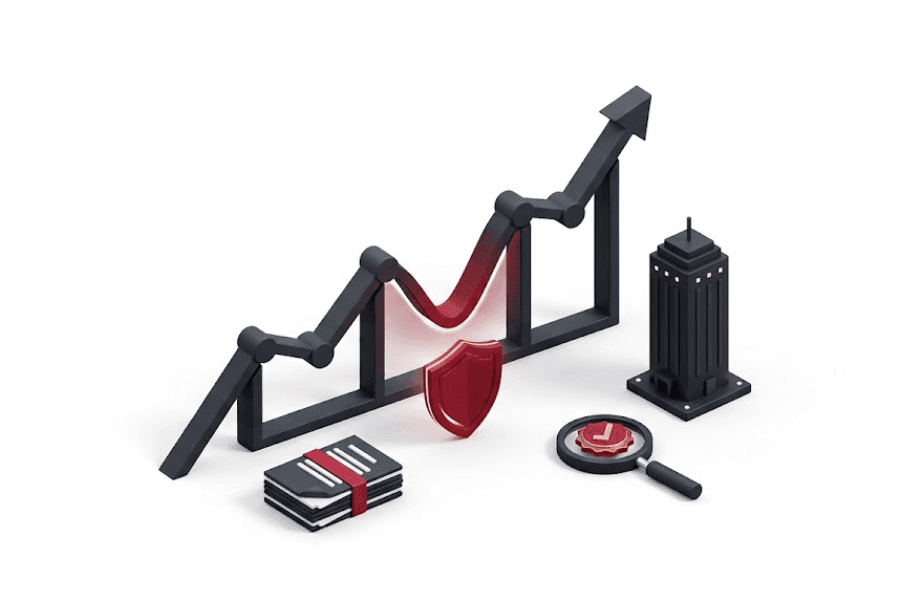
QUICK TAKEAWAY A revenue dip or a temporary rise in leverage doesn't automatically translate into a downgrade. Rating agencies distinguish between cyclical, temporary pressure and a structural deterioration in credit quality — and how a company communicates and manages through a slowdown genuinely affects which of those two the agency concludes it's looking at. |
Every business goes through periods of slower demand, margin pressure, or temporarily elevated leverage — from a broader economic slowdown, a sector-specific downturn, or a company-specific challenge like a delayed order book. For a company that's already rated, this naturally raises the question of what happens to the rating, and what, if anything, can be done to protect it during a difficult period.
How Agencies Actually Think About a Slowdown
Rating agencies distinguish between cyclical pressure — a temporary dip tied to broader economic or sector conditions that's expected to recover — and a more structural deterioration in the company's underlying competitive position or financial structure. A company that maintains a fundamentally sound balance sheet and competitive position through a cyclical downturn is generally viewed differently from one where the slowdown reveals or accelerates a more structural weakness.
What Agencies Look At Specifically During a Slowdown
• Liquidity buffers — how much cash and unutilised bank limits the company has to absorb a period of reduced cash flow
• Leverage trajectory — whether debt levels are rising temporarily due to the slowdown itself, or reflect a more sustained structural increase
• Cost flexibility — how much of the company's cost base can be adjusted in response to lower demand
• Management's response — whether the company has a clear, credible plan for navigating the downturn, or is reacting without a coherent strategy
• Peer comparison — how the company's performance during the slowdown compares to others in the same industry facing similar conditions
Steps Companies Can Take to Protect Their Rating During a Slowdown
• Communicate proactively with the rating agency rather than waiting for the next scheduled surveillance review — agencies generally view proactive, transparent communication favourably
• Present a clear, realistic recovery plan or cost management strategy, rather than either downplaying the slowdown or presenting an overly pessimistic picture
• Maintain liquidity discipline — preserving cash buffers and unutilised bank lines becomes particularly important during a period agencies are watching closely
• Avoid taking on additional leverage during the slowdown unless genuinely necessary, since this compounds the specific factor agencies scrutinise most closely in this scenario
• Provide context on how the slowdown compares to the broader industry, if the company's performance is holding up relatively well against peers
What Not to Do
• Avoid delaying or becoming unresponsive to the agency's surveillance requests during a difficult period — this is exactly when engagement matters most, not less
• Avoid presenting an unrealistically optimistic recovery timeline that isn't well-supported, since a missed projection can undermine credibility in future reviews
• Avoid making major, poorly-explained changes to financial reporting or accounting treatment during a stressed period, which can raise separate concerns about transparency
A Realistic Expectation to Set
Not every slowdown can be fully offset through communication and management alone — if the underlying financial and business impact is significant enough, a rating action may still follow, based on the agency's own independent assessment. What proactive management and communication genuinely change is the likelihood that the agency's conclusion accurately reflects the company's true resilience, rather than an incomplete picture formed from limited information.
Frequently Asked Questions
Will a single weak quarter automatically trigger a downgrade?
Not typically — agencies generally look at trends over a more extended period rather than reacting to a single data point, unless that single quarter reflects a genuinely material and sudden deterioration.
Should we wait for the annual surveillance review to discuss a slowdown with our rating agency, or reach out sooner?
Reaching out proactively, rather than waiting for the scheduled review, is generally the more effective approach — particularly if the situation is evolving and your own management has a clear view on it.
Can advisory support help present a slowdown to the agency more effectively?
Yes — this is a situation where structured, well-organised communication genuinely matters, and advisory support can help ensure the company's response is clear, complete, and appropriately framed.
Talk to FinMen Advisors
If your business is navigating a slowdown and you'd like help thinking through how to manage the rating conversation, FinMen Advisors' team can walk you through the options.
FinMen Advisors Pvt. Ltd. — India's Largest Credit Rating Advisors & Leading IPO Advisors. 15+ years | 13 branches | 80+ professionals | 6,500+ client assignments across 31+ industries.
Write to marketing@finmen.in or call +91-7738714680 to book an Initial Assessment.
Note: Credit ratings are assigned solely by SEBI-registered Credit Rating Agencies (CRISIL, ICRA, CARE, India Ratings, etc.). FinMen Advisors provides preparatory and advisory support and does not issue, influence, or guarantee rating outcomes.