


Tankers, Tariffs and Treaties: How the World's Headlines Are Reaching Indian Businesses
By: admin
Articles

Tankers, Tariffs and Treaties: How the World's Headlines Are Reaching Indian Businesses
Shipping lanes, trade talks, sanctions and supply controls are shifting at the same time. This article looks at each development, what the rating agencies have said so far, and the questions it raises for a CFO or promoter.

What is holding up
The global picture remains unsettled, but India's own credit standing has held up well. On 2 September, Japan's JCR upgraded India's sovereign rating to A- with a stable outlook. It cited strong growth, resilient consumption, public investment and an improving financial system.
Company-level credit has held up as well. In the first half of this fiscal year, Crisil's ratio of upgrades to downgrades improved on the previous half-year, and CareEdge's rose sharply. Around four in five of Crisil's ratings were simply reaffirmed. CareEdge linked the upgrades to resilient domestic demand in consumer-linked sectors such as auto ancillaries, textiles and gold jewellery retail.
This is a useful reminder that headline risk and credit quality do not always move together. A business can face real pressure from external events and still have a strong balance sheet, stable cash flows and a credible plan. The question for most companies is not whether the headlines matter, but how exposed they are to the specific channels through which those headlines reach their business.

1. The West Asia conflict: energy, shipping and the search for a deal
The conflict has disrupted global energy supplies for about eight months, and the path to a settlement has been uneven. In April, the US and Iran agreed a conditional two-week ceasefire tied to safe passage through the Strait of Hormuz. ICRA notes a temporary ceasefire ran from mid-June to early July.
For India, the exposure is structural. The country imports the bulk of its crude oil, and early in the war the average price of the Indian crude basket jumped sharply. In March, the Prime Minister set up seven empowered groups to deal with the long-term impact of the conflict on fuel, fertilisers, gas, supply chains and inflation. The government's approach signals that the effects are expected to last well beyond any single ceasefire.
What this means for businesses
Ind-Ra has said that the first-order impact comes from supply disruptions. These can interrupt production schedules and lead to export-order cancellations. Sectors that rely on fuel, feedstock or logistics may show stress within about three months. Ind-Ra expected near-term pressure on profitability and balance sheets in fertilisers, ceramics and glass, along with margin pressure for makers of air conditioners and man-made fibre, even as they try to pass on costs.
Crisil's May stress test of 34 sectors found the impact on credit quality manageable because of strong balance sheets. One sector faced a negative impact and seven faced a moderately negative one. Crisil described the ECLGS 5.0 scheme as timely support for MSMEs, which have smaller buffers and are more exposed. It named the magnitude of the conflict and the extent and duration of higher fuel prices as the crucial things to watch.
What this means for lenders
For NBFCs, ICRA's update of 31 July said the renewed conflict presents incremental downside risks to growth and asset quality. Its 30 October research headline says NBFC-retail growth is likely to remain resilient despite mounting macroeconomic headwinds. Lenders, in other words, are watching the same variables as borrowers, and they will expect to see those variables reflected in a company's plans.

2. US trade policy: a deal still to be signed
Tariffs announced by the US in 2025 raised the cost of many Indian exports. ANI estimated that these tariffs would have a 50% to 63.9% impact on many Indian merchandise exports. The estimate shows how much the answer depends on product, market and pricing power, not just on the headline tariff rate.
In early October, US Trade Representative Jamieson Greer said talks were close to finalising but that a deal was not imminent while a specific list of remaining issues was addressed. For planning purposes, this means exporters should assume that trade terms could change, but should not assume a settlement is around the corner.

3. Russia, Ukraine and sanctions on Russian energy
Sanctions policy adds another layer of complexity. In October, the US waived sanctions and duties under a law targeting major buyers of Russian oil and gas. S&P Global reported that the waiver was aimed at preserving Ukraine peace talks, and that lawmakers from both parties oppose it.
According to S&P Global, the waiver reduces uncertainty for refiners in India and China rather than changing the crude supply picture. Buyers may still diversify their supplies and remain cautious about future sanctions risk. Markets appear to see the waiver as a tactical reprieve rather than a durable settlement.
For a CFO, the practical lesson is that a sanctions waiver is not the same as a sanctions exit. Procurement and contract teams should treat sanctions-linked supply as a risk that can return, and should document how they assess counterparties.

4. India-EU trade agreement: opportunity with a timeline
India and the EU concluded FTA negotiations on 27 January 2026, and the EU remains one of India's key export markets after the US. The agreement is still moving toward formal signing and approval, which means the benefits are a medium-term opportunity rather than a near-term change.
Exporters say textiles, pharmaceuticals, chemicals, engineering goods, and gems and jewellery are among the sectors that stand to gain. The agreement is also expected to help Indian exporters diversify their shipments beyond their current markets.
There is a catch. GTRI's founder, Ajay Srivastava, has noted that the agreement does not address the EU's carbon border adjustment mechanism, so Indian exports can still face it. Companies planning to win EU business should factor in the carbon cost of their production, not only the tariff rate.
5. China and critical inputs
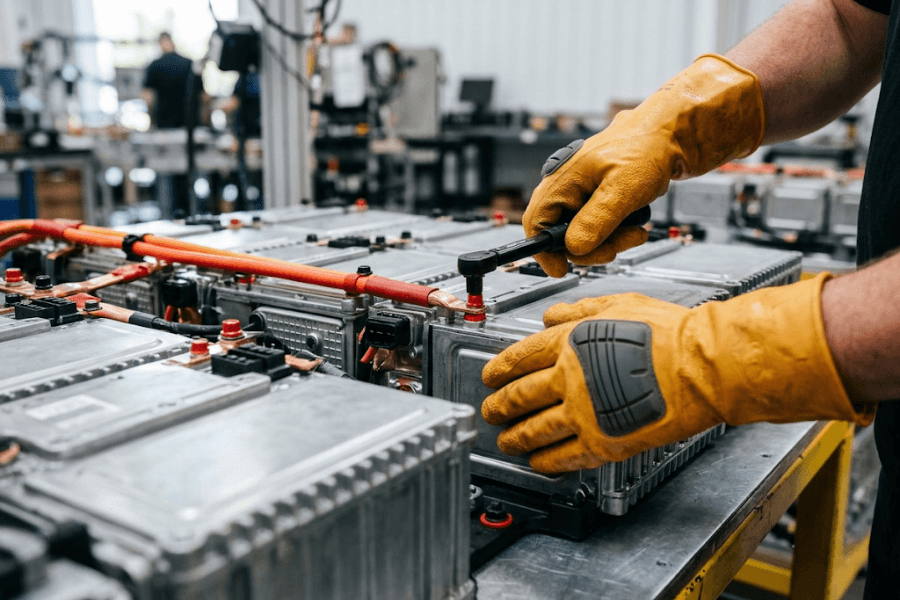
According to ORF, China's April 2025 export licensing on heavy rare earth elements and the magnets made from them has not been lifted. India sources more than 90% of its rare earth magnets from China. For manufacturers in electric mobility, electronics and industrial equipment, this is a concentration risk that is easy to overlook until a shipment stops.
The lesson is about dependence rather than about any single policy. A company that understands which of its inputs come from a single source, and how long it could operate without them, is in a far better position to discuss its resilience with a lender or investor.

6. The questions worth asking now
Thinking through the developments above is one way to prepare. The following questions can help a management team identify where it stands:
Which of my contracts let me pass on higher costs, and which don't?
If a key shipment or input is delayed, how long before it affects cash?
Am I too dependent on one supplier, one market or one shipping route?
If a rule on sourcing, tariffs or sanctions changes, which of my customers or inputs are exposed?
How much of my debt reprices with interest rates, and when?
Do I borrow in foreign currency, and how much of that is hedged?
Can I explain my liquidity cushion simply to a lender?
If conditions stay uncertain for several more quarters, what is my plan?
No single answer determines a rating. But a management team that can answer these questions clearly, with data, is better prepared to explain its position to a bank, a rating agency or an investor. It also tends to make better decisions when conditions change.

How to use this in your next lender conversation
Many promoters and CFOs find that the most useful preparation is a short, written story. It should explain the business, the main external exposures, the mitigating steps already in place, and the scenarios the management team has considered. Lenders and analysts respond well to clarity and to evidence that the team has thought about downside cases, not just the base case.

Where to start
The right next step depends on where your business stands today. A structured review of your current credit position, your rating readiness and your financing profile can help you decide which of the questions above matter most for your situation.
FinMen offers an Initial Assessment to help businesses understand where they stand and what to prepare before approaching lenders or the rating process.
Which of these developments is affecting your business the most right now? Share your view in the comments.
Ratings are assigned by SEBI-registered credit rating agencies such as CRISIL, CARE, ICRA, India Ratings and Acuité. FinMen is a credit rating advisory firm and does not assign ratings. Rating advisory services support the rating process; they do not guarantee any rating outcome. A rating is an opinion, not a guarantee.
Sources
Japan Credit Rating Agency sovereign rating upgrade for India, 2 September 2026, as reported by India TV News and Free Press Journal.
Business Standard, "Healthier balance sheets drive credit upgrades across sectors in H1FY27," 30 September 2026.
News on Air, US-Iran two-week ceasefire agreement, 8 April 2026.
ICRA, research reports dated 31 July 2026 and 30 October 2026.
BusinessToday, "How the War in West Asia is affecting the Indian economy," 19 March 2026.
News on Air, "PM Announces Formation of Seven Empowered Groups," 25 March 2026.
BW Businessworld, Ind-Ra commentary on West Asia conflict impact, 2026.
Crisil Ratings, "Our West Asia stress test of 34 sectors," May 2026.
The Tribune (ANI), "US tariffs will have 50% to 63.9% impact on many Indian merchandise exports," 13 August 2025.
The Tribune, "India-US trade agreement not 'imminent', says US Trade Representative Jamieson Greer," October 2026.
S&P Global Commodity Insights, "Trump waives Russia oil sanctions to preserve Ukraine peace talks," 19 October 2026, and "US waiver eases risks for India, China, but won't alter Russian crude flows," 23 October 2026.
Deccan Herald (PTI), "Explained: FTA with EU to help boost India's exports to 27-nation bloc," 27 January 2026.
Basis Point Insight, "India-EU FTA Anchors Ties, But CBAM Remains the Elephant in the Room" (Ajay Srivastava, GTRI), 27 January 2026.
ORF, "India's Rare Earth Vulnerability: Building a Strategic Defence Reserve," 23 September 2026.