


Common Documentation Required for a Credit Rating Exercise
By: admin
Articles
Common Documentation Required for a Credit Rating Exercise
A Comprehensive Guide for Companies Preparing for a Rating
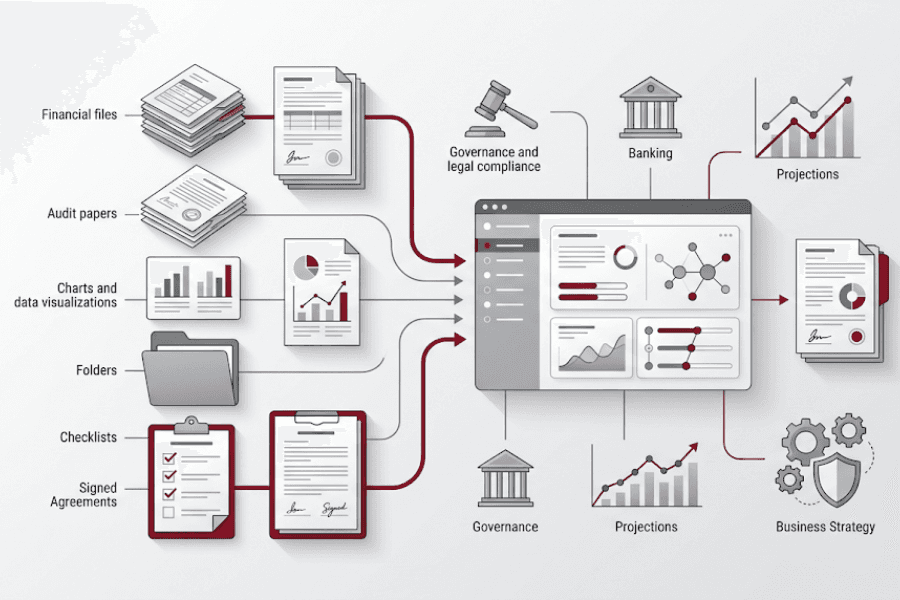
A credit rating exercise is a structured and in-depth evaluation of a company’s creditworthiness conducted by an independent rating agency. The quality, completeness, and clarity of documentation submitted during this process play a critical role in shaping the final rating outcome.
Rating agencies rely on documentation to understand not only historical financial performance, but also the company’s business model, governance framework, risk profile, future plans, and ability to service debt obligations. Inadequate or poorly prepared documentation can lead to delays, repeated queries, conservative assumptions, or even adverse rating outcomes.
This article provides a detailed overview of the common documentation required for a credit rating exercise, explaining what is typically asked for and why each category matters.
1. Corporate and Legal Documentation
The first step in any rating exercise is establishing the legal identity, ownership, and governance structure of the entity.
Commonly required documents include:
Certificate of Incorporation or Registration
Memorandum and Articles of Association or equivalent constitutional documents
Details of promoters, shareholding pattern, and ownership structure
Group structure chart including subsidiaries, associates, and joint ventures
Board resolution approving the rating exercise and authorising signatories
These documents help the rating agency understand the legal framework, promoter control, group linkages, and governance environment in which the company operates.
2. Governance and Management Information
Management quality and governance standards are key qualitative factors in credit evaluation.
Typically requested documentation includes:
Profiles of promoters, directors, and key management personnel
Organisational structure and reporting hierarchy
Details of board committees such as audit, risk, and compliance
Governance policies including related-party transactions, internal controls, and risk management frameworks
Strong governance documentation provides confidence in decision-making discipline, transparency, and long-term stability.
3. Historical Financial Statements
Historical financial performance forms the foundation of quantitative analysis.
Rating agencies generally require:
Audited financial statements for the last three to five years
Balance sheets, profit and loss accounts, and cash flow statements
Notes to accounts and accounting policies
Auditor reports along with explanations for any qualifications or remarks
These statements are used to analyse trends in profitability, leverage, liquidity, cash flow generation, and financial discipline.
4. Interim Financial Information
To assess recent performance and emerging trends, agencies often request:
Latest provisional or unaudited financials
Quarterly or half-yearly financial statements
Management accounts for the current year
Interim data helps bridge the gap between historical performance and current operating conditions.
5. Detailed Financial Schedules and Break-Ups
Beyond published financials, rating agencies require granular data to understand underlying drivers.
This may include:
Revenue break-up by product, segment, customer, or geography
Cost structure details, including fixed and variable costs
Asset registers and capitalisation details
Working capital schedules for receivables, inventory, and payables
Ageing analysis of debtors and creditors
Such schedules allow analysts to validate financial performance and assess operational efficiency.
6. Banking and Borrowing Details
Debt structure and banking relationships are central to credit assessment.
Commonly required documents include:
Details of all fund-based and non-fund-based facilities
Sanction letters and loan agreements
Repayment schedules and maturity profiles
Interest rates, covenants, and security details
Bank statements for recent months
Information on guarantees, collateral, and third-party support
These documents help assess debt servicing ability, refinancing risk, and financial flexibility.
7. Business Profile and Strategy Documents
Rating agencies evaluate not only past performance but also future sustainability.
Key documents include:
Detailed business overview and operational model
Industry and market positioning
Customer and supplier profile, including concentration risks
Competitive landscape analysis
Long-term business strategy and growth plans
Clear articulation of the business model and strategic direction strengthens the qualitative assessment.
8. Financial Projections and Assumptions
Forward-looking analysis is a critical part of modern credit ratings.
Agencies usually ask for:
Projected income statements, balance sheets, and cash flows
Key assumptions underlying projections
Capital expenditure plans
Funding plans and expected changes in capital structure
Projections help agencies evaluate future debt servicing capacity, financial resilience, and sensitivity to adverse conditions.
9. Operational and Industry-Specific Data
Depending on the sector, additional operational data may be required, such as:
Capacity and utilisation details for manufacturing companies
Order book, contracts, or project pipeline
Customer acquisition and retention metrics
Regulatory approvals or licenses relevant to operations
This information helps agencies assess business risk beyond financial numbers.
10. Legal, Regulatory, and Contingent Information
To identify hidden or contingent risks, agencies typically request:
Details of ongoing or potential litigation
Contingent liabilities and guarantees
Regulatory compliance certificates
Material contracts with customers, suppliers, or partners
These documents ensure that off-balance-sheet risks are adequately factored into the rating.
11. Information for Group and Parent-Supported Entities
For companies that are part of a larger group, agencies may request:
Consolidated financials of the group
Details of inter-company transactions and support mechanisms
Letters of comfort or guarantees from parent entities
This helps assess group support, linkage risks, and overall financial strength.
Why Documentation Quality Matters
Well-prepared documentation offers multiple benefits:
Faster completion of the rating process
Reduced follow-up queries and clarifications
More accurate assessment with fewer conservative assumptions
Clearer communication of strengths and mitigants
Improved confidence among lenders and investors
Incomplete or inconsistent documentation, on the other hand, can delay ratings and negatively impact outcomes.
Best Practices for Companies Preparing Documentation
Begin preparation well in advance of the rating exercise
Ensure consistency across financials, projections, and narratives
Provide clear explanations for unusual trends or one-time events
Maintain transparency and accuracy in all disclosures
Organise documents systematically with proper indexing
Conclusion
A credit rating exercise is only as strong as the information that supports it. Comprehensive, accurate, and well-structured documentation enables rating agencies to conduct a thorough and balanced assessment of a company’s credit profile.
By understanding the documentation requirements and preparing proactively, companies can significantly improve the efficiency of the rating process and ensure that their credit story is evaluated in the right context.